
Jst-4-Fn principles and conventions
This page presents the shared framework of the Jst-4-Fn standard: its purpose, prerequisite skills, recommended gear, the leader’s role, and how calls are composed. The first maneuvers and exercises are grouped on a separate practical page.
Introduction
Section titled "Introduction"General
Section titled "General"Flying a quad-line kite is already rewarding. Team flying adds another layer: shared timing, calls, spacing and the pleasure of making several kites behave like one group. As Mike Kory wrote in the “Revolution Mega-Fly figures” manual: “the wonderful thing about flying a Revolution kite is that you can fly shoulder-to-shoulder with strangers and soon you’re laughing with friends”.
As a beginner in team flying, the vocabulary and maneuvers may be new. The standard gives you a first common language.
This standard provides the small step between a good kite pilot and the “Revolution Mega-Fly figures”.
You don’t need to be a member of a kiteflying team, you just need to meet other kitefliers who know the same techniques, and you’ll be flying together in no time.
The main aim of this document is to create "FUN" by flying together, hence the name of our standard: Just for Fun / Jst-4-Fn.
Who this standard is for
Section titled "Who this standard is for"As mentioned above, you don’t need to be a member of a kiteflying team — anyone familiar with the Jst-4-Fn standard can fly together.
Main objective
Section titled "Main objective"The main objective is to enjoy flying with kitefliers of different skill levels. Individual skill levels are not a barrier. All kite pilots are welcome to participate.
Sub-objectives
Section titled "Sub-objectives"- A simple standard for team flying, with the aim of maintaining a link with the vocabulary, figures and international rules used.
- Acquire the basic skills and knowledge of team flying
- Improve your individual flying skills
- Have fun flying as a team
When and where to practice?
Section titled "When and where to practice?"Anywhere, as soon as you meet a kite pilot. Experienced kite pilots are usually willing to help and answer questions — that’s the kite family.
Basic skills required
Section titled "Basic skills required"You should already have some knowledge and experience of the basic flying techniques and the maneuvers based on them, as described by Revolution Kites:
- Basic flying techniques:
- flying forward in all directions;
- turning left and right, both quickly and progressively;
- stopping and hovering, motionless, in all directions;
- flying reverse in all directions;
- controlling speed, forward and reverse;
- side sliding.
- Speed and spacing:
- speed: being able to fly evenly, at the same speed;
- spacing: maintaining a fixed distance from the kite in front of you.
It’s important to get used to flying with a lot of “brake”, see the note in the section on handle adjustment.
The gear
Section titled "The gear"The kite
Section titled "The kite"There is no particular rule on the type of kite to use. It’s best to use the same type of quad-line kite (for example, all pilots fly vented or semi-vented sails).
Carbon rods are a matter of taste. Choose a set of rods that allows you to fly with other pilots at the same speed and spacing.
Preferably LPG, Shanti, Climax or other professional lines.
A line length of 120 feet (approx. 36.6 m) is the international standard for team flying.
Handles
Section titled "Handles"It’s a matter of taste. Whether long or short, everyone has their own preferences. The most important thing is to be able to adjust your “leaders” to fly with plenty of brake.
If you set your leaders as illustrated below, you’ll be able to cover virtually all wind conditions and fly efficiently as a team.
Note that this setting depends very much on your kite’s bridle and handles.
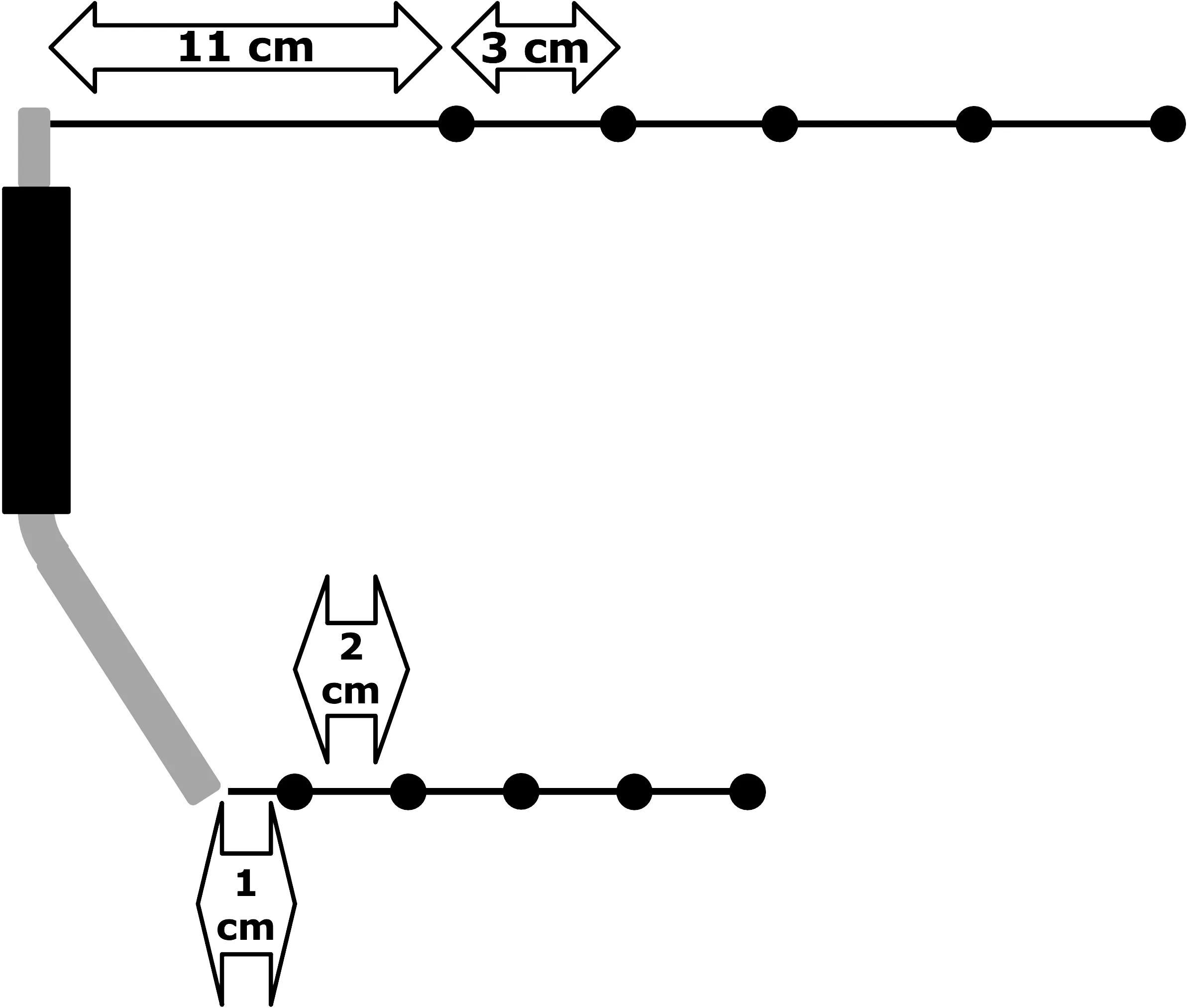
Try to fly with as much brake as possible:
- Start with the upper lines hooked to the end of the high “leaders” (the knot as far away from your hands as possible).
- And attach your lower lines (brake lines) to the knot closest to your hands.
- Launch the kite.
- Have you succeeded in flying the kite? Even if it’s less comfortable than usual, it’s okay! Keep flying with this setting.
- If it’s absolutely impossible for you to launch the kite, move one knot towards your hands and try again.
This leader setting may seem strange. Your previous settings probably made it easier for you to fly. Bear in mind that you’re just starting out in team flying, and you’ll need maximum control over your glider’s speed and positioning. This setting will give you more control over your kite. Keep this setting and it will feel more comfortable after half an hour to an hour of practice.
Dress code
Section titled "Dress code"No dress code, just take care of yourself and make yourself comfortable.
Wear clothes that protect you from the wind and rain, and good waterproof shoes or boots. If it’s cold, more layers of clothing and gloves.
In sunny weather, a cap or hat and sunglasses. Don’t forget to protect your skin with sunscreen.
In hot weather, be vigilant: drink enough water.
Basic team rules
Section titled "Basic team rules"Orders ("calls" in English) given by the leader are in English. This standard is also available in other languages. Give preference to orders in English. This opens doors to international team flying. It’s an excellent way to broaden your friendships.
The leader
Section titled "The leader"(Also called "Caller")
As a leader, you have additional responsibilities. Your team-mates may be less experienced than you, and less able to anticipate each other’s reactions.
Try to get an idea of the experience level of your “temporary” team.
Start with simple calls or use kite sticks to prepare the moves you want to make.
And, most importantly, leave an extra second between your order and the "Go" to allow your team members to shout “What?”. (= SAY WHAT).
Numbering
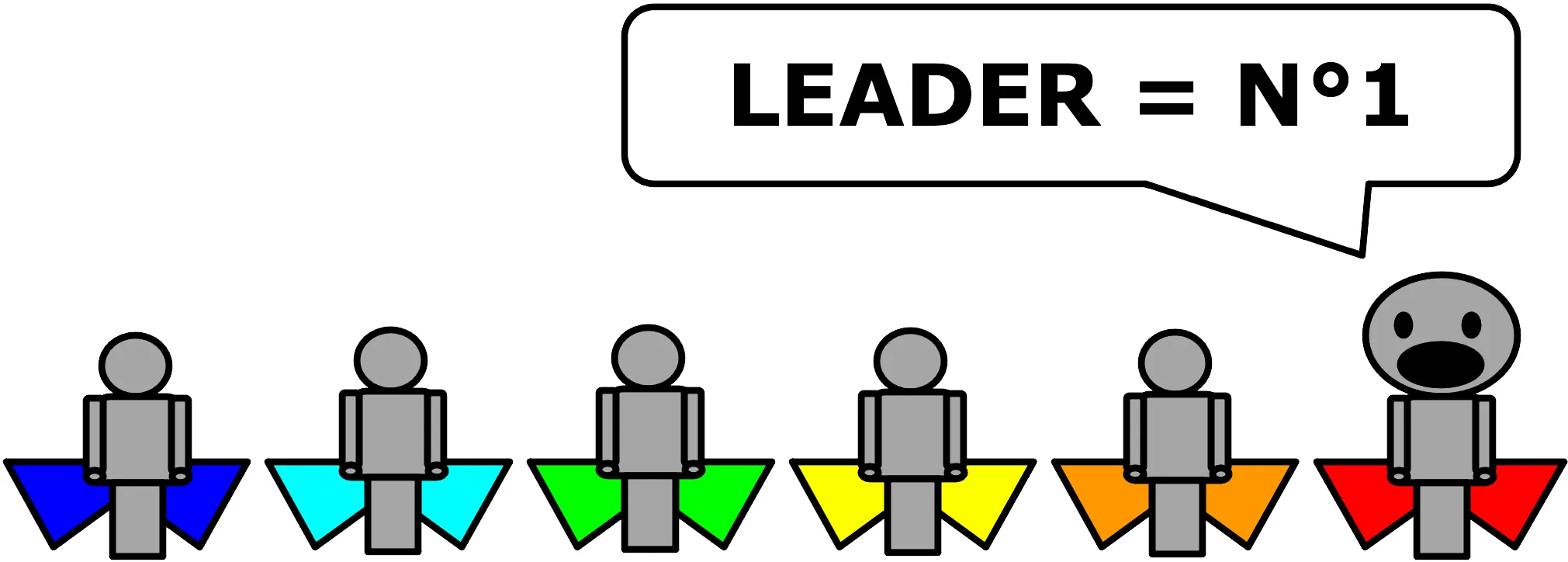
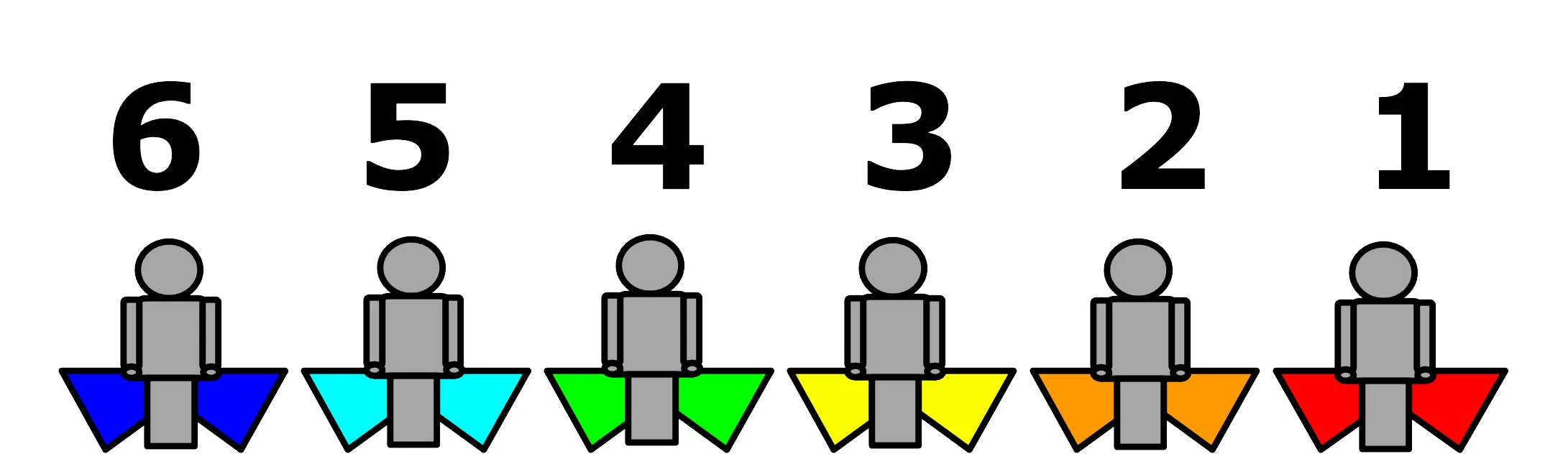
Section titled "Numbering"Numbering starts on the right. The kiteflier furthest to the right is number 1. The one to the left is number 2, and so on. In the illustrations, the color of the kite is linked to this line numbering.
Even & Odd
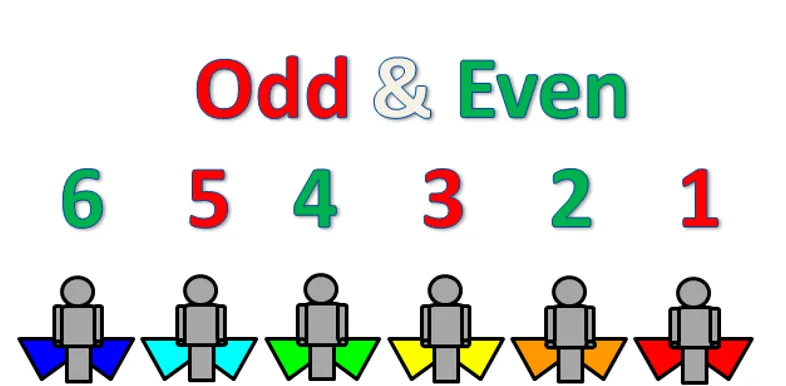
Section titled "Even & Odd"Your place in the team is also your number. Know this number. The leader uses these numbers or specifies "Even" / "Odd" when giving orders. For example, "Face left, even… Go !"
In practice, we often use synonymous expressions: "Numbers 1" for "even" and "Numbers 2" for "odd".
Tip: when the team includes more than 4 members, the leader can ask for a different count. The leader says “1”, the second says “2”, the third says “1”, the fourth says “2”… In this way, kitefliers clearly identify who is even and who is odd. This is very useful for understanding leader calls like "Numbers 1 up, numbers 2 down".
Grid flying (GRID flight) is not included in this standard. We offer an introduction to grid flying on the megateam page.
The problems
Section titled "The problems"If a pilot loses control of his kite, stabilize your kite in a position suitable to the situation (stop the kite in the air or land the kite). Give the pilot the opportunity to recover and give him time to rejoin on the correct place.
Another option is for the leader to shout "Fire drill". Each pilot then moves to a safer position in the air or on the ground. The most experienced pilots generally position themselves at the highest possible altitude (100% of the window) and wait there.
As a crew member, you can shout "SAY WHAT" if you don’t understand an order from the leader. As a leader, don’t give the "Go" if you hear "SAY WHAT".
If ever the lines get tangled and form a knot… Stay calm and start untangling together. Don’t worry. It happens to all of us one day.
A basic set of orders
Section titled "A basic set of orders"Composition of an order
Section titled "Composition of an order"The leader shouts:
- The maneuver to be performed or a figure, e.g. "Face left"
- Optionally, an additional explanation/specification, e.g. "ODD face right"
- A short delay to allow pilots to say "Say what"
- and "GO".
Example:
- Without specification: FACE LEFT,…GO
- With specification: FACE LEFT, ODD FACE RIGHT, … GO
50%, 75%
Section titled "50%, 75%"This is an indication of the flight altitude in relation to the wind window.
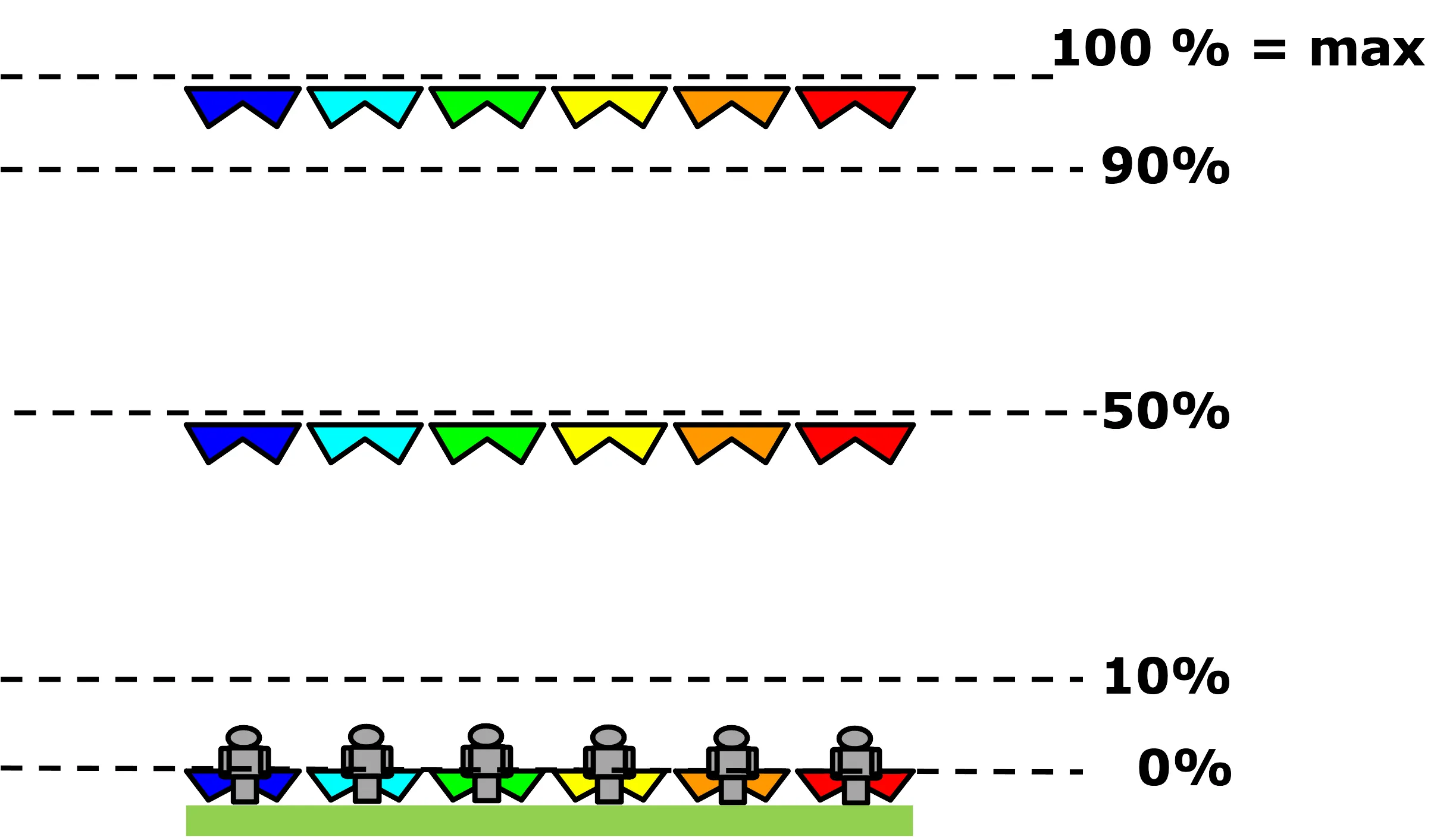
In Holland, leaders say "GO". In the USA and UK, you’ll often hear "NOW". In France, leaders say “GO” or “TOP”.
After "GO", the leader’s instruction is carried out by the whole team.
Pay attention to orders when the leader gives specific instructions to team members. For example, "Face right, number 1 and 3… Go". Numbers 2 and 4 remain in their original positions.
Put these principles into practice
Section titled "Put these principles into practice"The next page gathers the first maneuvers in the standard, training instructions and two guided exercises: Jst-4-Fn basic maneuvers and training.
Last updated