
Kite competition: Marc Levesque goes behind the scenes
Published on May 16, 2025 by Alban Kites
I’ll be on the field in Tomblaine, France, from June 13 to 15, notebook in hand and microphone ready, to show what happens behind the scenes at the French Championship.
Before that, I caught up with Marc, just back from the Houlgate regional round, and we pulled the thread. I ask the questions, Marc answers. Six highlights, no evasive answers.
This is a conversation summary written in the first person for both of us. Marc provided the photos used in this article.
When I arrive at a field, I only see kites. What happens behind the scenes?
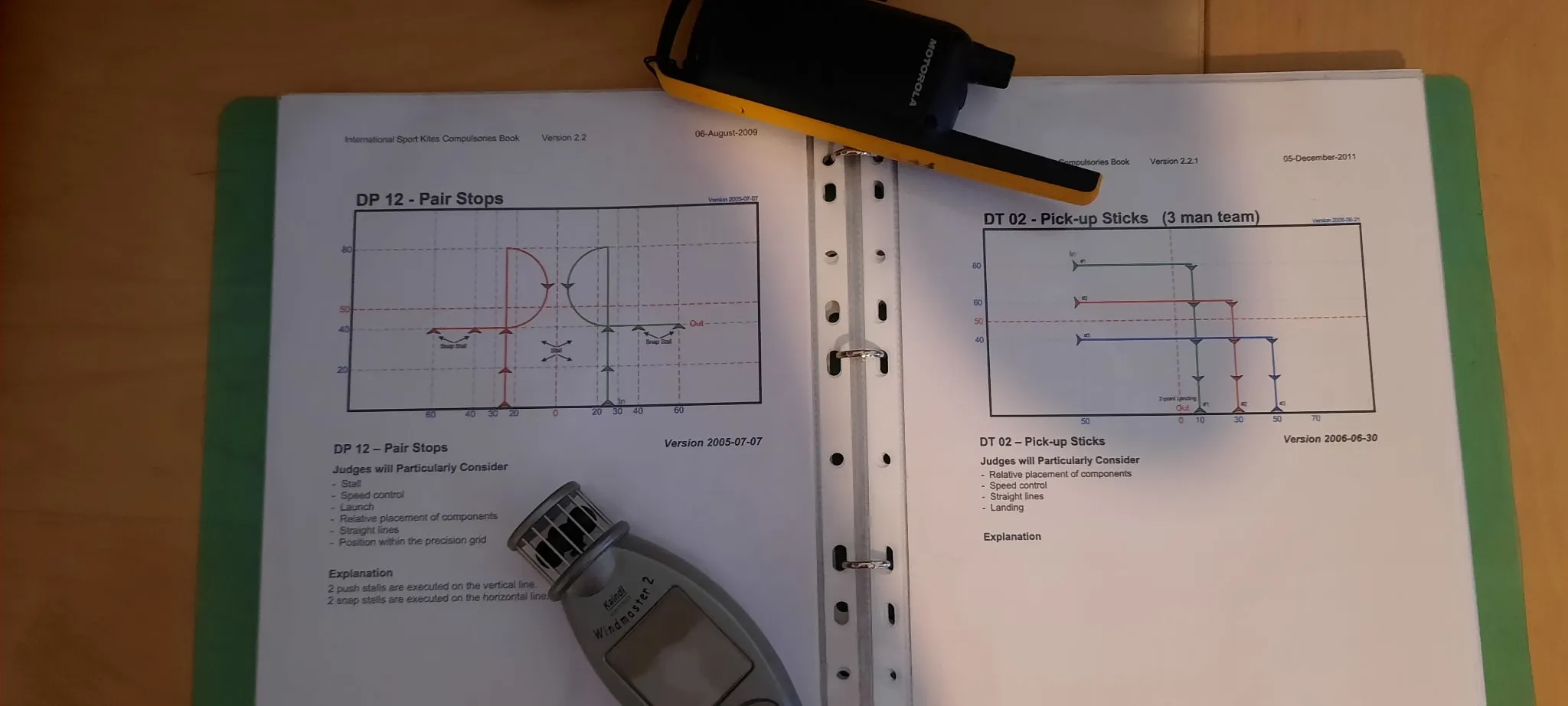
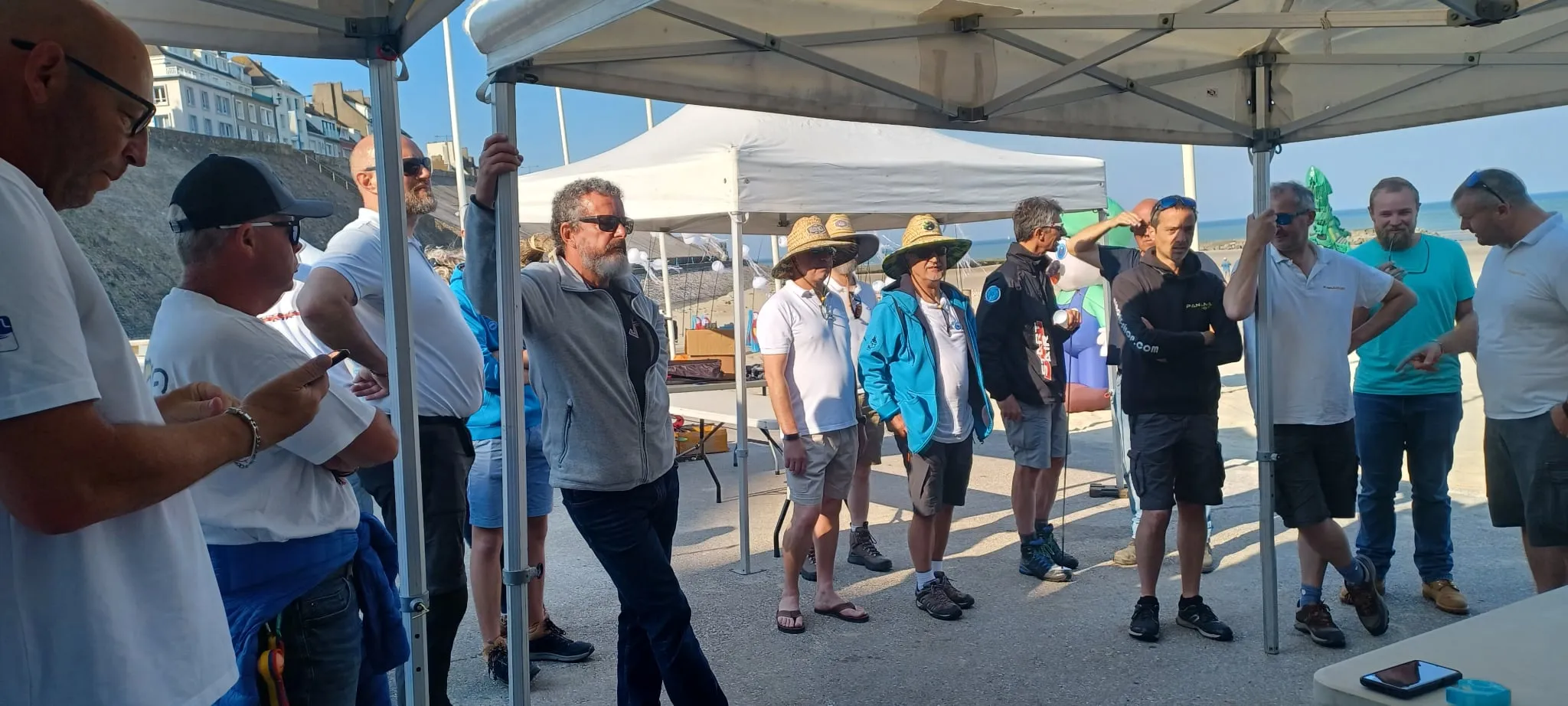
Section titled "When I arrive at a field, I only see kites. What happens behind the scenes?"Marc — “We meet in the morning, put our bags down, registration opens, and we check that everyone’s licence and competition card are up to date — except for open rounds, of course. Then the judges run the briefing, and after that it’s non-stop until the competition is over.”
- Several formats are possible, depending on the weather, the number of pilots and the constraints of the site, such as the tide. Organizers and judges split the compulsory figures and ballet events while following the rules.
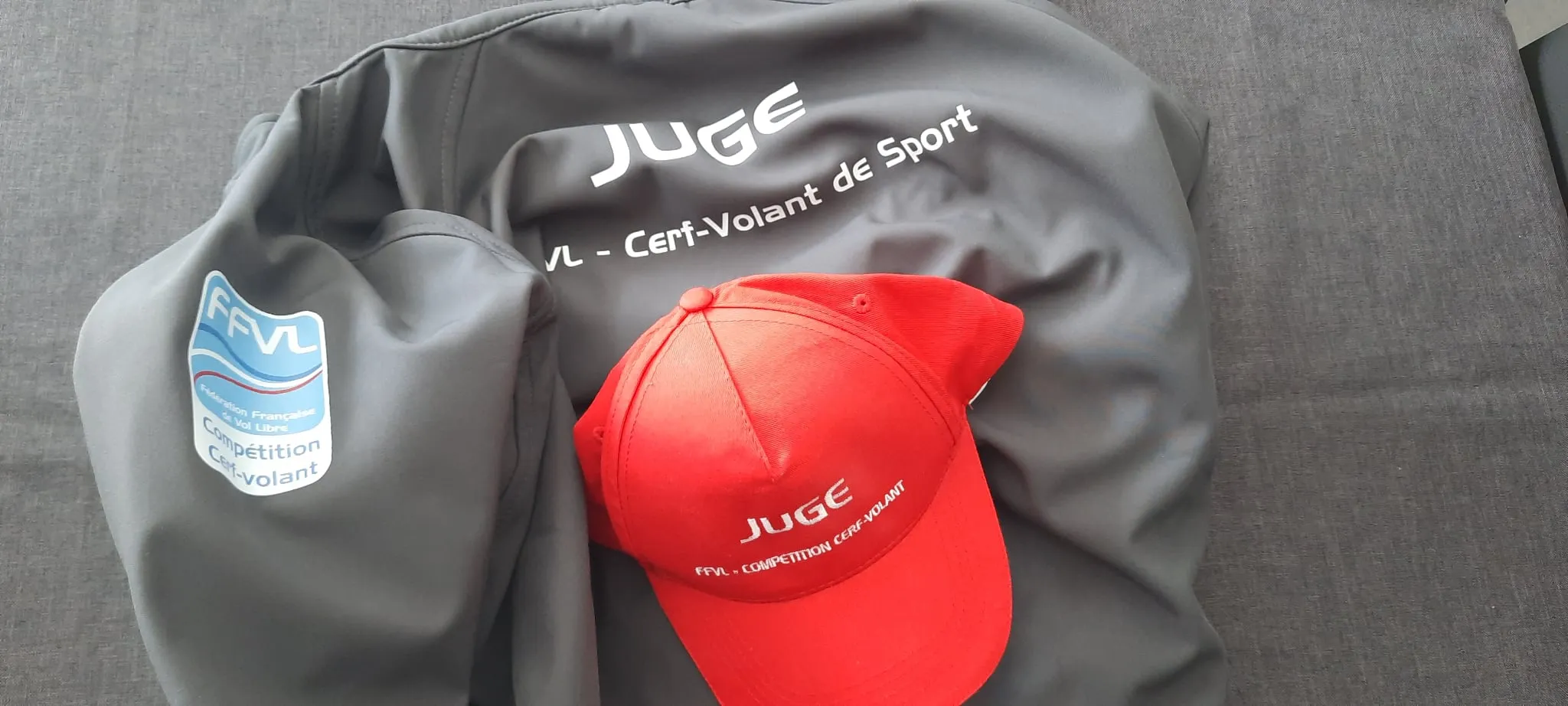
- The judges run a marathon. “At major competitions like the French Championship, they can spend 8 or 9 hours standing, with no real break, running events across the different categories so the competition finishes on time and every event is completed.”
“Behind the scenes, before any kite is even in the air, we spend the whole year trying to find a place and date for the French Championship, and trying to secure enough regional qualification rounds. Unfortunately, over the last 2 or 3 years, we’ve only had 2 regional rounds per season: Houlgate for Normandy and Amiens for Hauts-de-France. A few years ago, Marcollin in Auvergne-Rhône-Alpes was also on the calendar, but not anymore. At the start of my term, we had 8 to 10 qualification rounds a year. Then COVID came through, and the momentum has struggled to restart. We lack club initiatives and support from the CDVLs and leagues, especially in eastern and southern France, to set up qualification rounds.”
Why organize competitions?
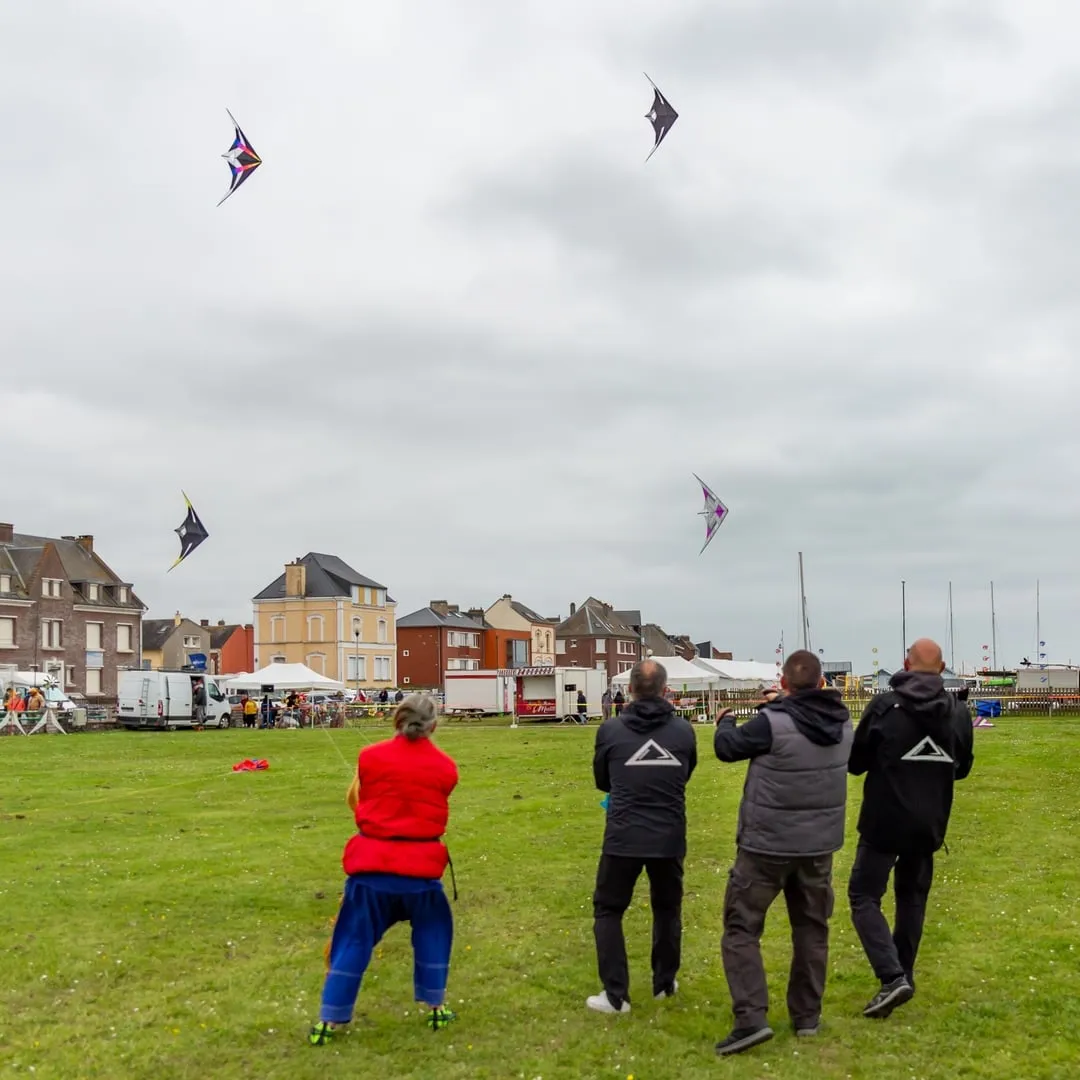
Section titled "Why organize competitions?"Marc — “Because some pilots enjoy it. Compulsory figures, and the preparation of a technical routine, force you to work on things you would probably avoid when flying only for fun. For example, the upward reverse in quad-line flying: without competition, I would probably avoid it, or at least it would not be my priority. But there, no choice. I had to work on it as a compulsory figure, and that helped me progress to the point where I now try to include that kind of technical difficulty in my ballets too, to gain a few more points and maybe move up the ranking.”
- A progress accelerator. “Without competition, you stay in your comfort zone, even if you regularly fly demos at events. That is already a step, but you can remain soft, with little risk-taking, in demos aimed at an audience that often does not know the discipline well. With competition, and with the comparison against other competitors and judges, you discipline yourself. You time your sequences, film yourself, correct yourself, and work to repeat the same sequences with the same timing whatever the conditions. There is also a lot of mutual help and advice from experienced pilots, judges and even competitors.”
- A showcase for festivals. “On the microphone, announcing a French champion or a European vice-champion has an impact. Even saying that a pilot qualified for the French Championship or ranked in the top 10 catches attention. The public does not know whether there are ten pilots or a thousand. They remember titles and rankings. It makes organizers notice you, and they are more likely to invite you.”
- Public and community. “At the end of a ballet demo set to music, with freestyle figures, when you get strong applause, it feels good. You feel proud. You tell yourself the effort was worth it and the work paid off. Last weekend, there were several thousand people on the Houlgate seafront, and several hundred gathered around our field to watch and applaud our ballets. That gives you energy for days.”
Newcomers. “We always hope for more competitors, but many people do not dare. They are afraid of looking ridiculous. It is true that you often finish near the bottom in your first competitions. So what? You have to start somewhere. With persistence and work, you climb the steps. And maybe you are underestimating yourself. Look at Quentin last weekend: first competition, already second place, and maybe a French podium in 2026. Without an event, he would have stayed much more anonymous.”
We often hear, “The federation should…”. What is the reality?
Section titled "We often hear, “The federation should…”. What is the reality?"Marc — “The FFVL is a national delegated federation. It guarantees the rules and their application, manages official titles and discusses with the State, especially the Ministry of Sport. In that role, its main obligations are training, organizing competition at national level, and supporting competition at lower levels. Below that, in France, you have:
- leagues, at regional level, in contact with regional councils;
- CDVLs, the departmental free-flight committees, at departmental level;
- associations and clubs, at local level.
Each level is itself an association, so each one is autonomous in its decisions and management. But CDVLs, leagues and the FFVL are supposed to help affiliated clubs with their actions, sometimes financially through grants, but not only. Often, projects also need people, volunteers, recognition and visibility.”
- Grants and reality. “Funding follows projects, when they are justified.” Clubs can request grants by explaining their needs. The federation, leagues and CDVLs check that the subsidies they distribute benefit members through affiliated clubs and actions aligned with the values they defend. If the application is accepted, support can be shared across the three levels.
- Volunteers. “We forget too often that at the federation, in leagues and in CDVLs, most of the work is done by volunteers. They cannot be everywhere and available full-time. They have jobs, family lives, friends, other sports and hobbies, like everyone else.”
- Clubs are central. The federation provides tools, advice and co-funding, but it cannot organize every competition. It mostly handles the national level — the French Championship — and still needs a local club for the field organization and local partnerships. “For the regional level, clubs with competitors in their ranks absolutely need to organize qualification rounds so their pilots can qualify and so a first-level network can exist.”
A vicious circle. “No regionals → no beginners → fewer and fewer competitors over time → no competitions, regional or otherwise. We absolutely need to break that cycle. But for that to happen, it has to come from a handful of locally motivated people in each region willing to set up qualification rounds.”
What was your first competition like?
Section titled "What was your first competition like?"Marc — “In 2014, during the Dieppe festival, I met Jérémy Maton, leader of the Cerfs-Volants Folie team, which was competing at the highest level at the time. He pushed us a little, my pair partner and me: In two weeks, there’s a regional in Rouen. You’re coming!
At the time, we were just beginning to dare to fly a few demos at events, without much ambition and mostly in improvisation mode. We did not really have music, and nothing was properly written. Just a few routine fragments that I would call as we went along, over a soundtrack that was rarely well matched to the tempo.
We showed up not really ready, convinced we would finish last. And we did, obviously. But the atmosphere was great, and I liked it immediately. It allowed me to fly alongside the best, collect advice and learn from them. It also forced me to actually write a ballet in two weeks, just so I would not feel ridiculous, because this time I had to fly in front of judges and experienced competitors. In the end, we progressed more in 15 days than we had in the previous six months to a year of awkwardly trying to fly as a pair. That was it. Since then, not a year has gone by without me taking part in qualification rounds and trying to qualify, first in pairs, then also in individual dual-line, and more recently in quad-line too. It is like a gentle virus that helps you move forward and progress.”
I want to try. What advice would you give?
Section titled "I want to try. What advice would you give?"Marc — “First, welcome. We need competitors, especially younger ones. Come to an open round: you will get a ranking for the day, with no pressure. Do not be afraid. Today, we no longer have the toxic rivalries between sponsored teams that existed several years ago. On the contrary, there is a lot of advice, mutual help and kindness from experienced teams towards newer competitors, even between competitors in the same category. Yes, on the field, everyone tries to edge ahead of their friends in the ranking, but it stays good-natured and friendly. Competitors even lend each other kites in case of breakage or when someone’s kite is not suited to the weather. The atmosphere is really worth it.”
- Find a club that enjoys competition. “Without a driving club, nothing happens. At EO’Kite, my club, we do not win many medals, at least not the top spots, but we qualify several pilots every year across several categories. One of our individual multi-line competitors, Rémy, even qualified for and took part in the last Eurocup in 2023. I also encourage all our members to take every opportunity to progress through regular training courses. I remain convinced that our appetite for competition pushes us to seek progress, stay informed about training opportunities, attend as many events as possible — festivals, friendly meets or competitions — fly demonstrations whenever possible, and ultimately progress more than if we flew alone in our corner, without meeting pilots who bring experience and advice, and without regularly facing the public and judges.”
- Read the “Cerf-volant Fédération Française” Facebook page. “The official website remains a reliable source for fixed information, such as rules, figures and results. We also try to manage news there, but it is probably not clear enough, and a little too niche, to be truly followed. On Facebook, you reach more people — friends of friends — and news spreads more easily.”
- Dare to fail. “Nobody laughs at a beginner. At worst, you discover your level. At best, you leave with a trophy and the desire to come back. And you learn by being around the best. Personally, that is how I learned everything.”
“The hardest part is starting, taking the first step. After that, for some people, like me, entering the arena for a competition or a demo becomes like a drug. It boosts the adrenaline.”
Can you name a few competition-oriented clubs?
Section titled "Can you name a few competition-oriented clubs?"Marc — “The Cerf-Volant Club Jules Verne in Amiens remains a reference for me. It is the club of the Start’Air team, which won everything in pairs and team.
Aventours, in the Paris region, is run by one of our national judges and attracts strong pilots, especially individual competitors, from all over France: Richard Debray, Sébastien Karnier, Marjorie Truchet, to name only a few.
SMKC, in Auvergne-Rhône-Alpes, is also run by one of our national judges and includes several high-level competitors: Arnaud Duhamel, Sam and Laura from the Axel’R pair, the Connexion team, and others.
There is also Wind Family, based in Burgundy, home of the Panam’Air team.
And Dynamic Bertry, whose president is an individual dual-line competitor, formerly leader of the Aero Ch’ti team, and which hosts the Guess team.
Then there is my own association, EO’Kite, based near Le Havre, with 8 competitive pilots to date, regularly selected at French level across 4 of the 6 categories. I hope I am not forgetting any clubs 😅.
From memory, almost all the competitors we regularly see at every level of federal competition come from one of these clubs.
An active club is not necessarily the one that wins everything. It is also the one that pitches its tent, puts out the banners and makes people want to join in.”
What I take from it… and you?
Section titled "What I take from it… and you?"- Competition is an accelerator: goals + advice from experienced pilots = fast progress. It moves both the discipline and the pilots forward. It is not just about handing out medals.
- The ecosystem matters: federation, league, CDVL, club. Each is a link in the chain, but the chain only holds if the field — the clubs — pulls. No competition without active clubs.
- The atmosphere in 2025 has changed: no more team wars. Mutual help is now central, and experienced pilots are happy to share tips.
- A title or ranking, even a modest one, opens doors: for a festival, “regional vice-champion” or “5th at the French Championship” still has an effect. Of course, the higher the title or ranking, the stronger the impact.
I’ll be in Tomblaine from June 13 to 15 to experience the dawn briefings, the minute-by-minute registration, and those moments when the judges finally put away their anemometers. This conversation makes me want to stretch out my lines and ask the obvious question: why not you?
To go further
Section titled "To go further"- Cerf-Volant Fédération Française on Facebook
- Fédération Française de Vol Libre website
Last updated