
Interview with Thierry Deschamps on kite bootcamps
Published on May 3, 2025 by Alban Kites
I wanted to understand how a kite workshop comes together: the original idea, the organization, the teaching choices, the constraints, and above all the person carrying the project. Today, I’d like you to meet Thierry Deschamps, an enthusiast who organizes workshops every year in Normandy, France, to introduce people to sport kites or help them improve. The story is practical, generous, and it makes you want to pick up your lines again.
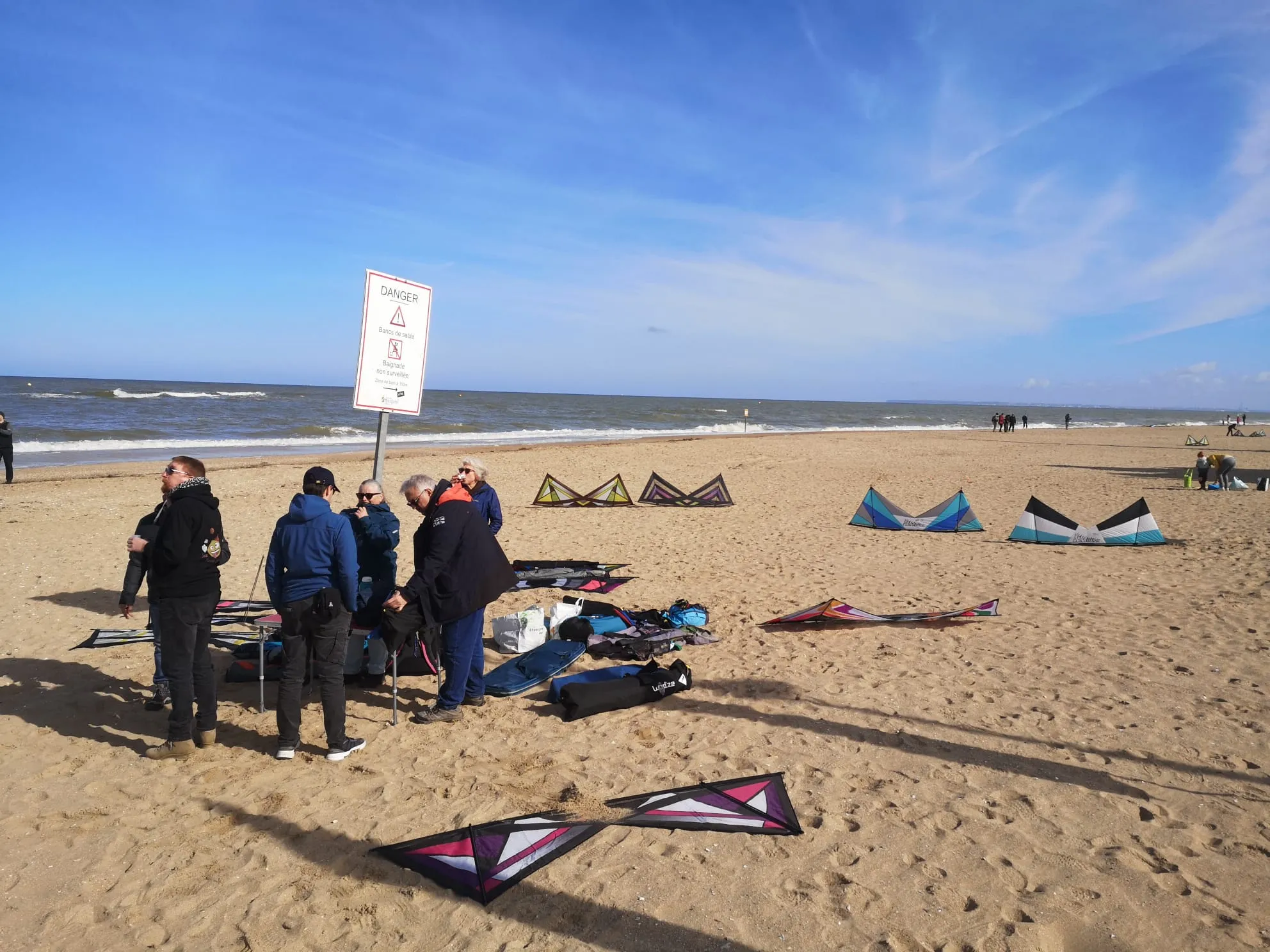
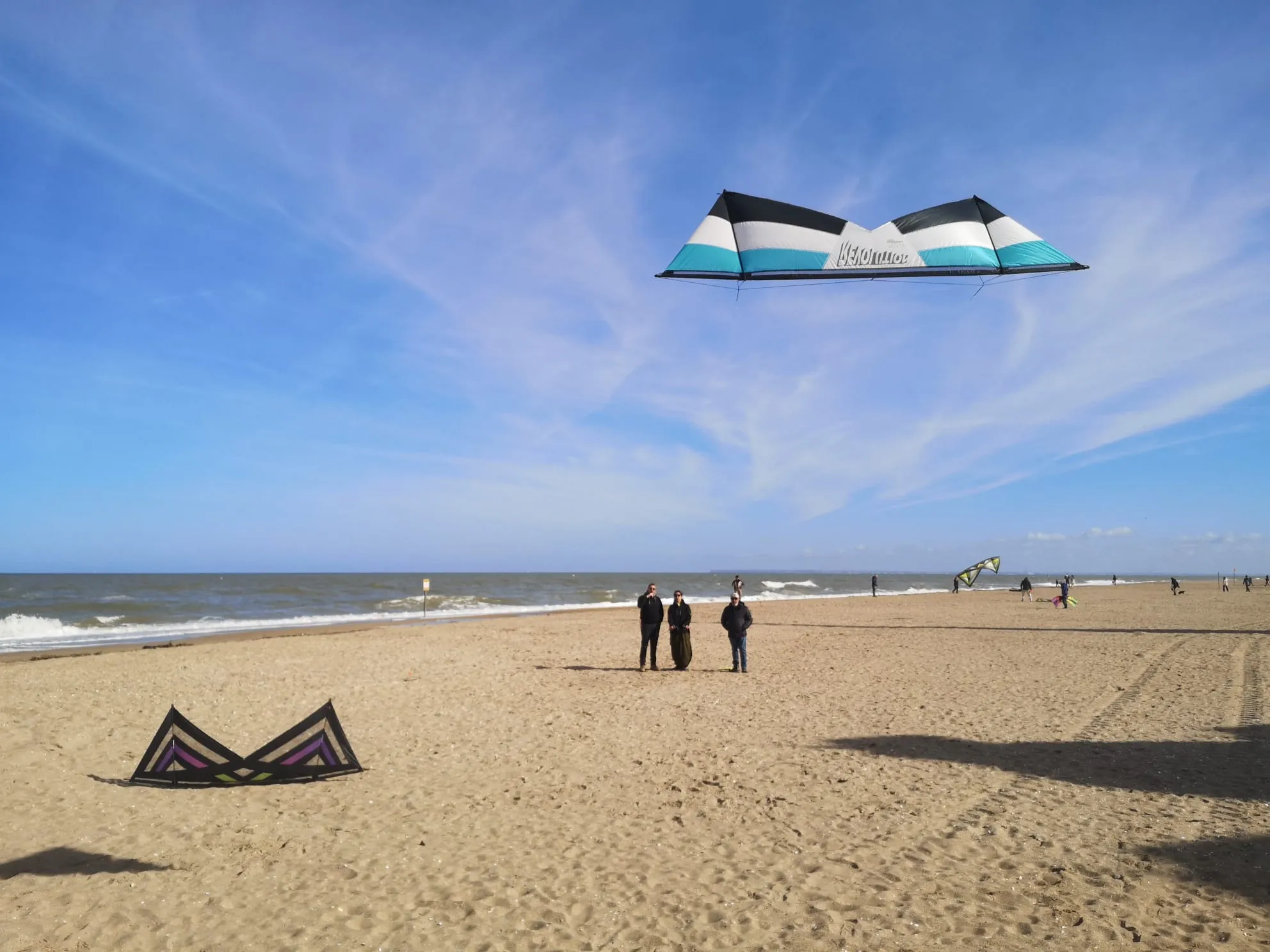
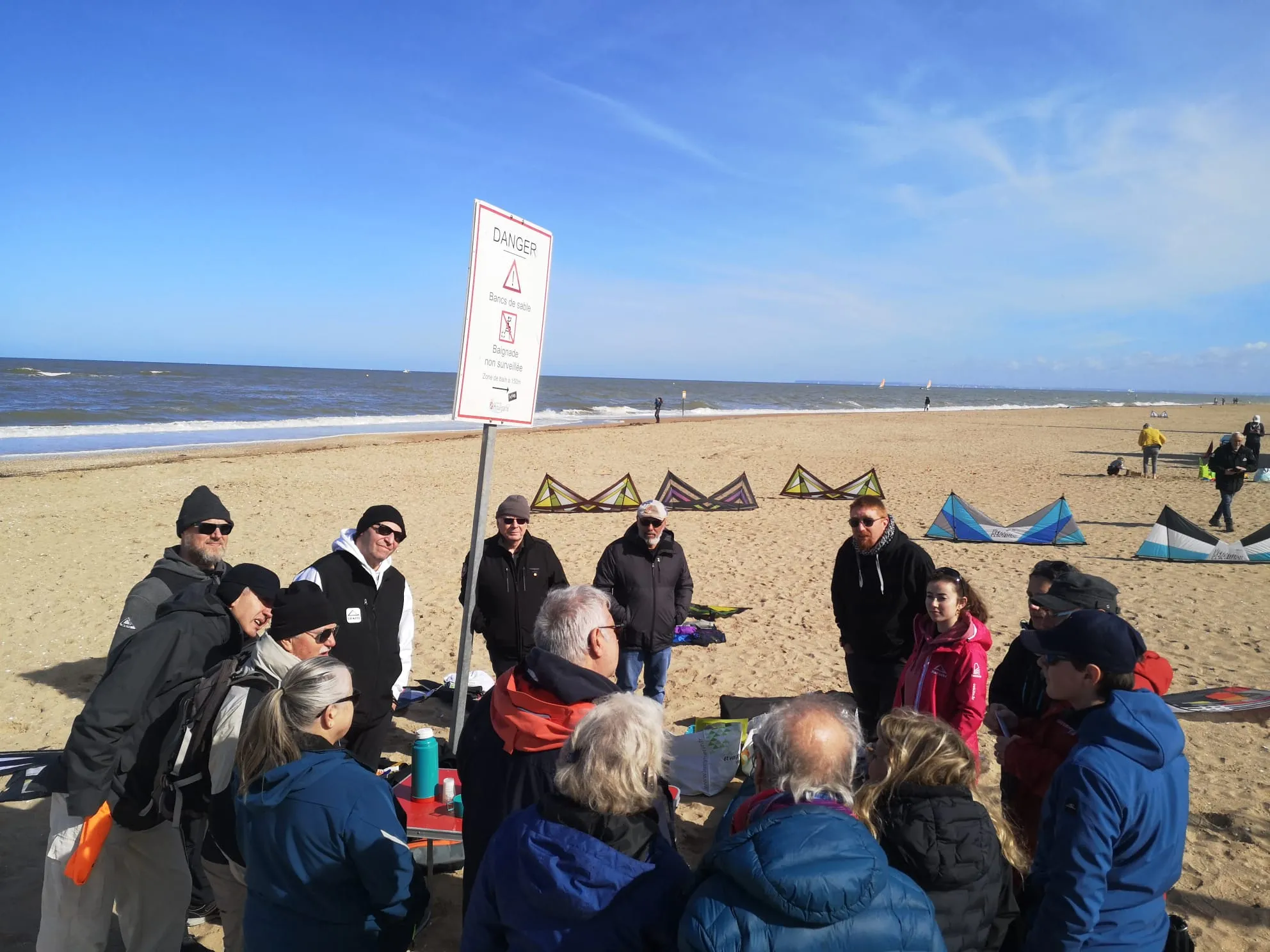
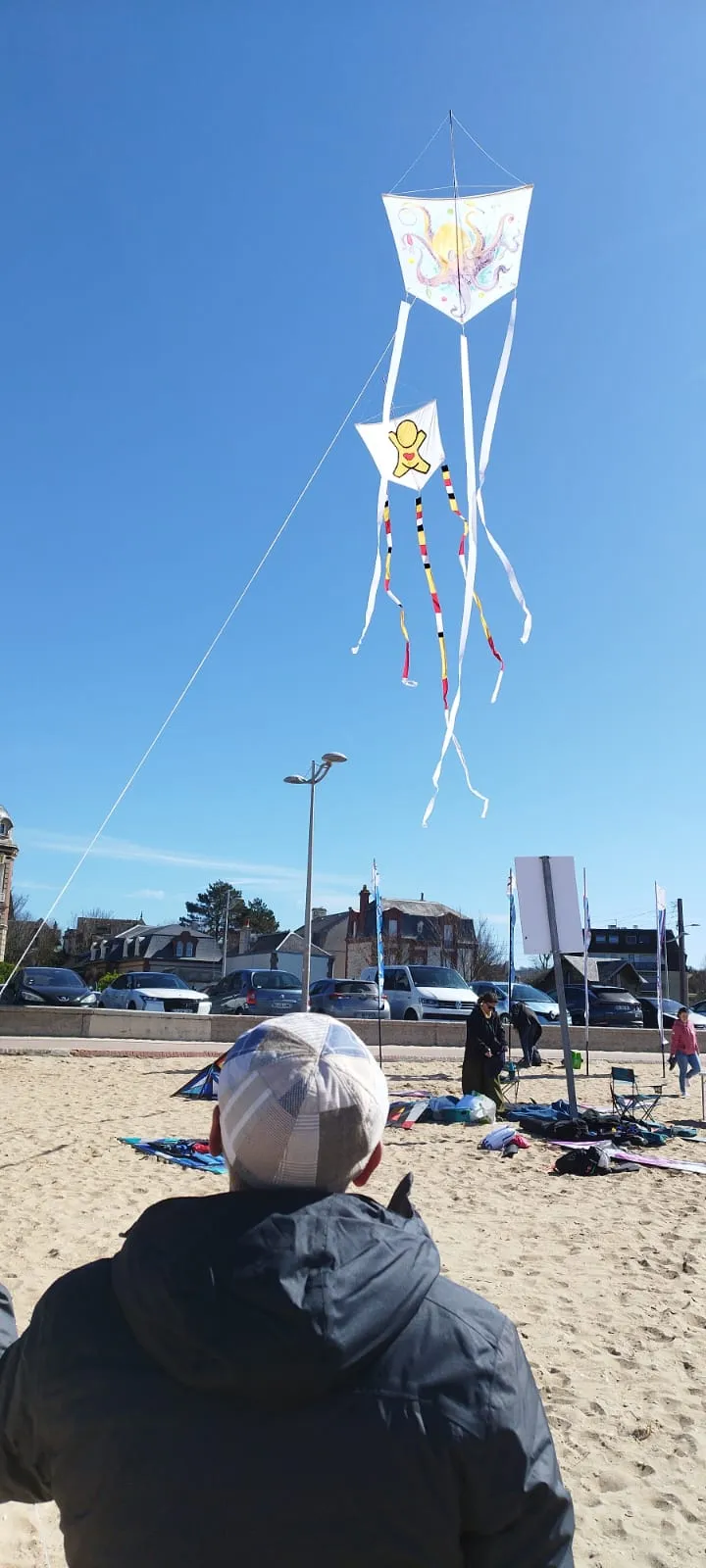
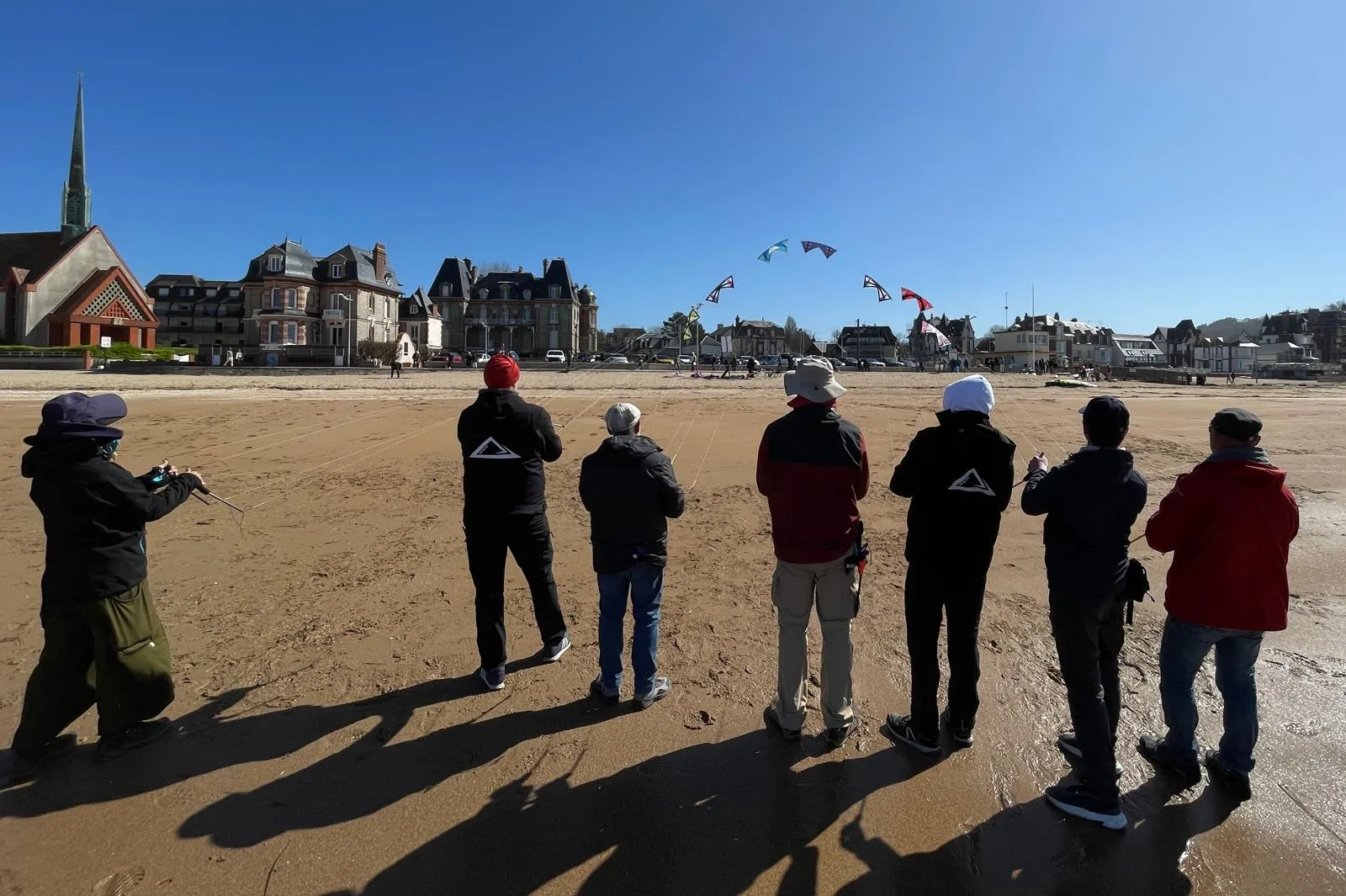
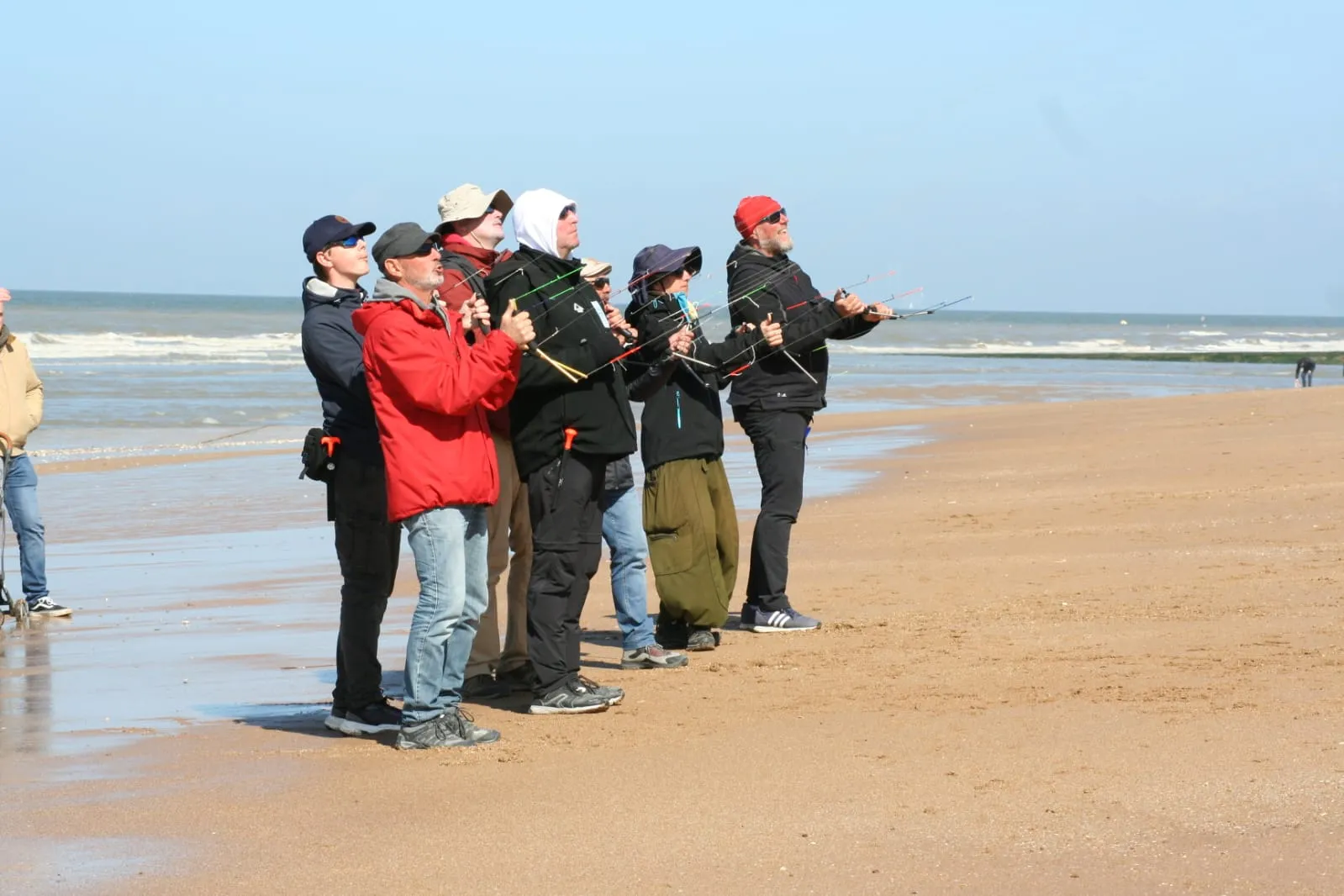
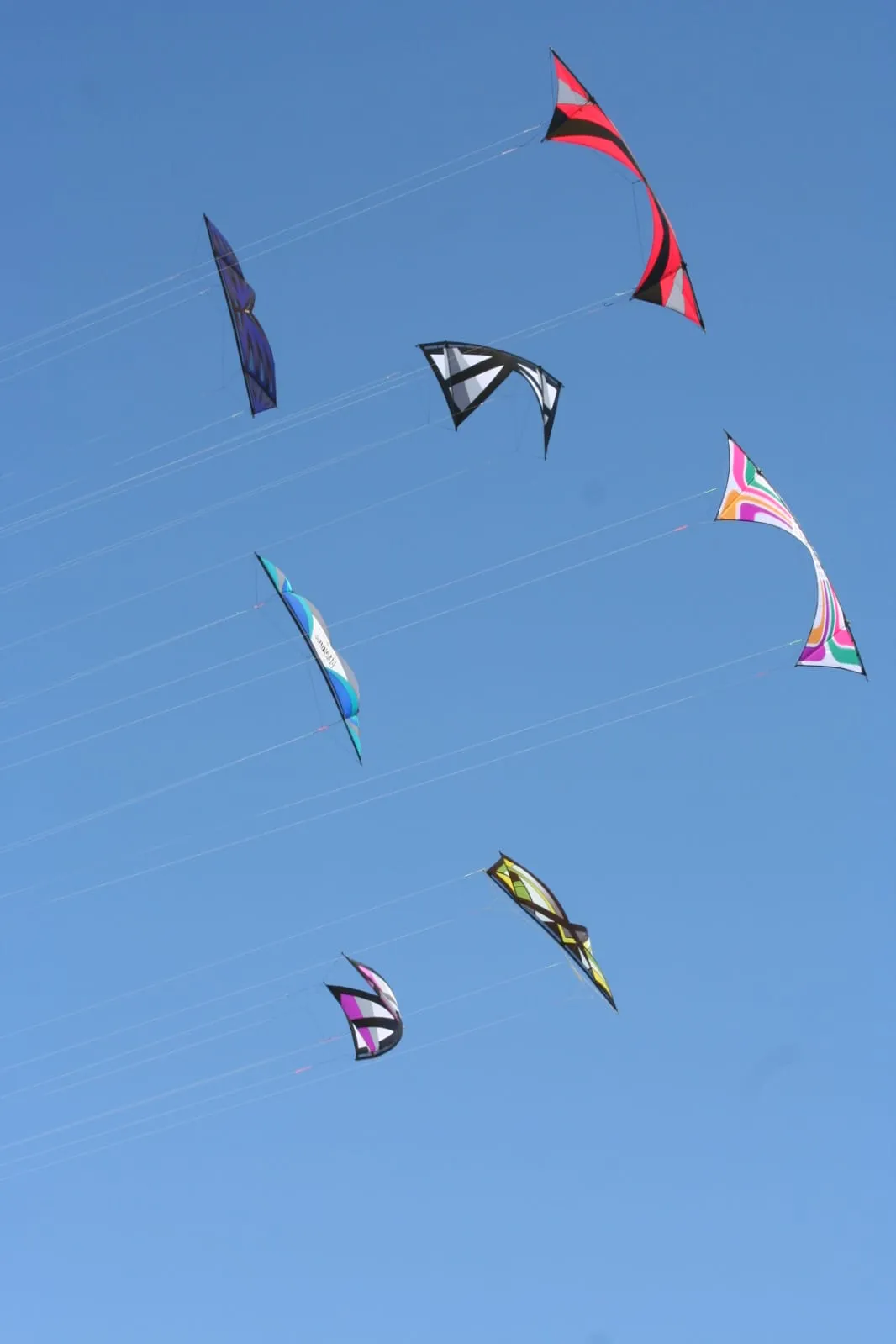
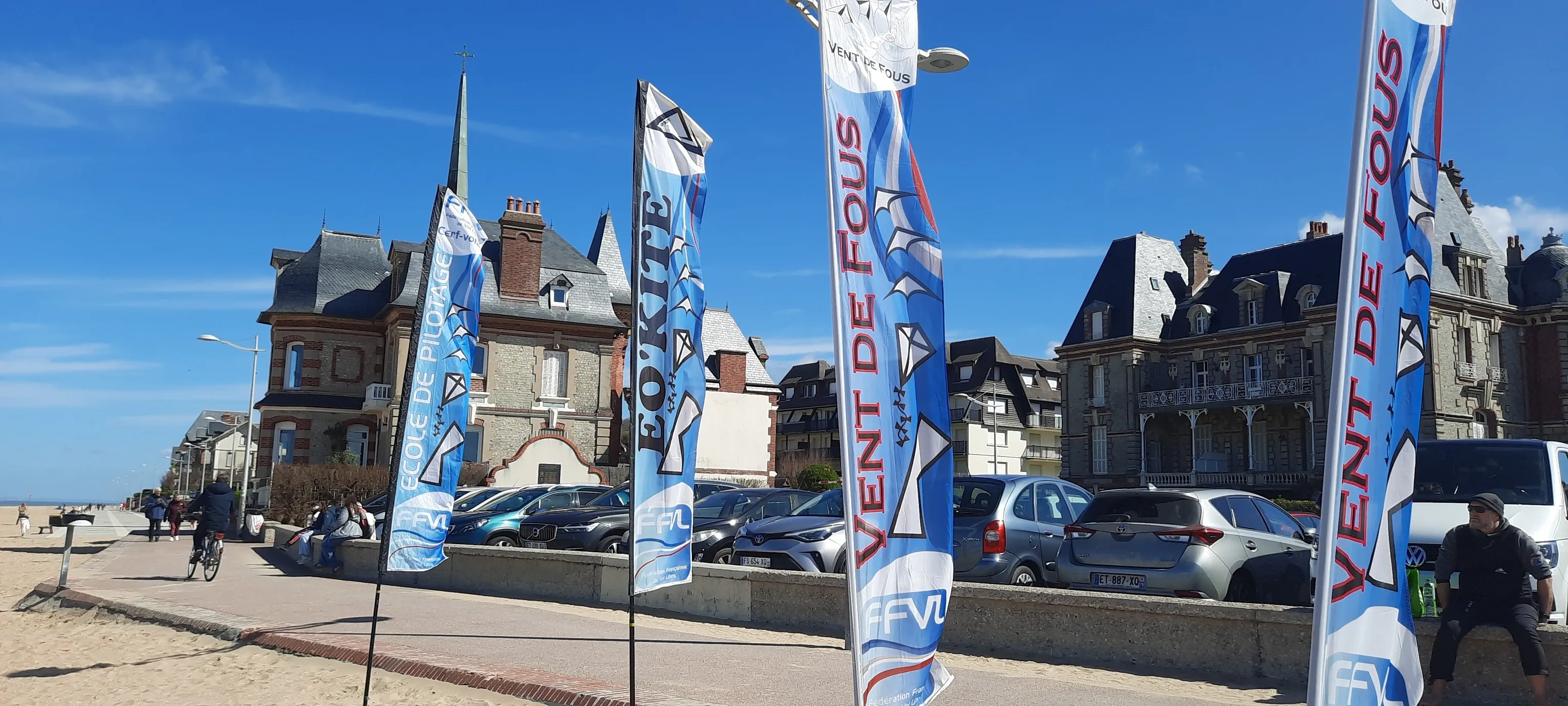
(By the way, I’ve included a few photos throughout the article from the March 2025 quad-line workshop Thierry organized — just to help you get a feel for the atmosphere.)
Can you introduce yourself and tell us about your journey in the world of kite flying?
Section titled "Can you introduce yourself and tell us about your journey in the world of kite flying?"Well, I’m Thierry. I got into all things flying at a very early age, because my family was already into aviation: my grandfather was a fighter pilot, and my father was also in the air force. As a result, I quickly became interested in playing with the wind, building and flying model gliders. By the time I was 6 or 7, my father and I were already building our own kites. We made Conyne deltas.
Then came the discovery of the radio-controlled glider, the competition, and then one day a buddy brought out a freestyle kite. I was convinced that it was “badly tuned” because it went off in all directions, until he explained to me that it was done on purpose! Then it was love at first sight: I entered the Vent de Fous association in the late 90s, built my first kites, and learned from friends who, in some cases, were French or European champions themselves. I discovered a team that was always interested in sharing and exchanging. At that point, I really got into flying with my wife, Tifenn, whom I met in the association and who is a founding member of Vent de Fous and a competitor in the Air de Rien team, among others. Since then, we’ve never really stopped.
What gave you the idea to start organizing these kite bootcamps?
Section titled "What gave you the idea to start organizing these kite bootcamps?"Over the years, in our Vent de Fous association, we’ve always come across people who wanted to learn to fly a kite, but found themselves without any guidance. Often, they had a large kite that was a bit wobbly, or they’d set it up upside down on the beach! We could see the frustration and, frankly, it hurt our hearts not to be able to help them go further.
Tifenn came from a sailing background and reminded me that in a sailing club, you don’t just go out and buy a boat. So we said to ourselves: “What if we created a kite ‘school’ too? We’d make suitable gear available, so that new pilots could try it out without necessarily spending 200 or 300 euros all at once. That was the initial idea: “a quality kite park, managed by the association, and open to all”.
That’s how we launched the school: we approached several French manufacturers to acquire batches of around ten “standard” kites and as many “ventilated” ones. In the end, Drôle d’Oiseau (Stéphane Dolé) really supported us by offering negotiated prices. This enabled us to build up a fleet of 20 kites for beginners and advanced kite flyers.
Then, after signing an agreement with a town hall for the loan of a field on Saturday mornings, we set up the school with sessions every Saturday morning for pilots of different levels. In terms of teaching methods, Tifenn and I have used what we learnt during federal training courses (Tifenn is a trainer and I’m an instructor), resulting in sessions adapted to the level of the pilots, and like a sports training session, each session starts with a warm-up and ends with a debriefing. This creates a great group dynamic.
At the same time, Nicolas Lormeau organized a freestyle bootcamp in Houlgate. Not being used to these tricks, I signed up. I found it so instructive that, when Nicolas stopped organizing them, I wanted to take over and continue to offer this two-day format, which was more intensive and richer in terms of progress, but I transformed it from a “freestyle” bootcamp into an “advanced” one. Since then, we’ve offered three annual events: a 2-line “improvement” bootcamp, a 100% women’s multi-level bootcamp, and a 4-line “improvement” bootcamp. There’s something for everyone: the technique, the group atmosphere, and the conviviality that gets everyone going!
Can you give us an overview of the preparations required to organize a bootcamp?
Section titled "Can you give us an overview of the preparations required to organize a bootcamp?"Organizing a bootcamp isn’t exactly rocket science. First of all, you have to want to do it. But in concrete terms, there are quite a few things to plan. You need to :
- Find a location: ideally a large beach or open field, with accommodation nearby. We’re loyal to Houlgate (Normandy), because the beach is clear and large enough to accommodate 12 to 16 participants, and because the on-site sports center offers rooms and a common room at attractive rates.
- Gathering instructors: you don’t necessarily need the best pilots, but people who are comfortable teaching and who want to pass on their knowledge. Finding a well-known instructor obviously helps to attract participants. It’s not always easy to reconcile the three criteria.
- Budget: you need to cover travel and accommodation for the instructors. The Ligue de Normandie Vol Libre and the FFVL (French fédération) help us out. Trainees also pay their own accommodation costs, but we try to keep registration fees low to keep them affordable.
- Obtaining authorizations: the town hall, or the landowner, must be aware of this, which is essential. This allows you to practice legally and not find yourself in competition with other events.
- Communicating and recording registrations: we rely on word-of-mouth, a little post on the networks and information on the FFVL website, and then the participants come back year after year. Then you have to deal with the registration forms, the FFVL license, the division into groups, and so on.
Clearly, it’s a lot of work before, during and after: you’ve got the balance sheet phase, subsidy applications, reports for the League, and so on. But when you see your friends making progress, it’s really worth it!
After your first bootcamp, it’s easier to renew because you’re already familiar with the people, the places and so on.
What are the main challenges you face when preparing your bootcamp?
Section titled "What are the main challenges you face when preparing your bootcamp?"- The weather: Normandy has beautiful beaches, but when the wind blows in from the land, it’s turbulent and sometimes unplayable. Or maybe it’s high tide in the morning and you’re stuck with it… You have to deal with it and accept that you can’t control everything.
- Find good instructors: pilots who teach, who want to move around and who are willing to juggle the different levels of participants, because we’re generally a heterogeneous group. It’s best to agree on the minimum level of participants with the instructors before registration. For example, for a beginners’ bootcamp, it’s better to plan for around 4 beginners for one instructor, rather than 6-7 participants if it’s an advanced level.
- Budget: Write a provisional budget at the outset, then refine it. I apply for subsidies from the FFVL and the regional committees. Without subsidies, we’d be forced to raise prices, and I don’t want money to be a break.
- Mobilizing goodwill: clearly, without volunteers, we wouldn’t be able to do anything. It’s a challenge to unite people around a project over the long term. But we try to set an example and motivate the troops!
- Managing licenses and paperwork: you need licenses for insurance, to cover liability, to make a square file with the town hall and the Federation. It’s a bit daunting, but it’s compulsory.
How do participants react? Do you have any examples of feedback that impressed you?
Section titled "How do participants react? Do you have any examples of feedback that impressed you?"They’re generally very happy. It’s rare for someone to say “that’s rubbish”. People leave with more tricks, a better command of piloting, new encounters… There are those who had never attempted an axel or a flic-flac and who manage it on the spot - they’re smiles all the way! Once, a beginner trainee confided in us that he couldn’t land his 2-line smoothly. By the end of the weekend, he was able to land exactly where he wanted, without a crash. He had stars in his eyes, and that’s very gratifying. And then there are the regulars who come back almost every year to fine-tune their technique or try out a new kite.
And there’s no mistaking the loyalty rate. More than half the trainees come back the following year. I have a good core of “repeat offenders” (laughs). That really pleases me: it proves that we’ve contributed something that makes them want to continue. The bootcamp fills up faster and faster because of this - now I know, I tell the old-timers first, and very quickly it’s full. It’s extremely gratifying for us organizers to see the confidence and enthusiasm of the participants.
What does volunteering in the kite world bring you personally?
Section titled "What does volunteering in the kite world bring you personally?"Frankly, I’ve never thought about it in those terms. It’s something I’ve always done, and in my family everyone helped out left and right, so for me it’s a natural thing. I don’t really like the idea of just being a consumer. Organizing a bootcamp is all about giving and receiving: you share your knowledge, and in exchange you learn from others, meet new people and contribute to the energy of the community.
Of course, it’s sometimes thankless: you’ve got the paperwork, the people who grumble because “why is it in Normandy?”, or who don’t appreciate the work involved. But to me, volunteers are the backbone of our hobby. Without these free helping hands, there would be no schools, no projects. And that’s what I love: building something, passing it on, then seeing people fly with a big smile on their face.
What advice would you give to someone who wants to get involved or organize bootcamps like yours?
Section titled "What advice would you give to someone who wants to get involved or organize bootcamps like yours?"- Go for it! If you feel like it, go for it, if only “to see”. Don’t be afraid to try.
- Find a suitable venue: a field, a beach, a gymnasium if you’re going indoor, with the possibility of accommodating everyone nearby. Comfort goes a long way towards conviviality.
- Surround yourself: get in touch with experienced pilots who are good at teaching. A post on Facebook, an e-mail, a few phone calls, and you’ll be surprised how many people are motivated. And talk to your league and federation to find out how to apply for subsidies.
- Don’t look for perfection: the weather can play tricks on you, the schedule can change, you need to adapt and not stress over nothing.
- Don’t hesitate to ask existing organizers for advice. They can give you their experience and advice, for example on budgeting and financing.
- And the most important piece of advice of all: keep the spirit of fun and sharing alive! We organize bootcamps first and foremost to pass on a passion, not to take on too much. It’s hard work, yes, but it’s also a lot of fun. The first time you see your trainees with a smile on their face, succeeding in an exercise thanks to you, you’ll forget all the hours spent preparing!
How can readers support you or get involved in promoting kites?
Section titled "How can readers support you or get involved in promoting kites?"The easiest way is to join a club, take out a license to support the community. This helps the Fédé to carry more weight, which means more resources to finance projects. Then, you can keep the discipline alive: talk to people around you, share videos and photos, take part in meetings and festivals. Even just lending a hand to set up a barnum for a weekend is a huge help.
In short, if you want to show that this hobby is worth the detour, we’d love any help you can give us in spreading the word. And if you’re feeling like an organizer or a trainer, go for it: we’d be delighted to help you!
Personal conclusion
Section titled "Personal conclusion"Thank you Thierry for sharing. And thanks to everyone who contributes, often behind the scenes, to organizing these workshops.
For my part, talking with Thierry gave me energy: to take my lines out, meet other enthusiasts, and maybe organize workshops or kite gatherings myself. What stayed with me is that organizing rests on a balance that is easy to name but demanding to keep: passion, perseverance, and volunteer work.
As Thierry says, it is not necessarily that complicated: believe in the idea, gather a few motivated people, find the right setting, and accept that you will learn by doing. Beaches, fields, and gyms do not ask for much more.
To go further
Section titled "To go further"- Find out about clubs near you: most of them have a website or Facebook page.
- Maybe you live in Normandy? If so, the Vent de Fous school can welcome you!
- Check the FFVL website, especially the kite section and the workshop calendar.
- Take an interest in festivals, large or small. Smaller events are often easier places to talk with pilots and understand the kite scene in France.
So now you know almost everything about the backstage work behind a Thierry Deschamps-style kite workshop. Now it’s your turn to fly.
Last updated