
Build a quad-line kite
This page gathers plans, tutorials and practical references for building a quad-line kite. Start here if you want a complete step-by-step guide, compare several construction approaches, or understand what experienced builders are doing before you cut fabric.
Most quad-line kites used here are inspired by the Revolution type. The first Revolution kite was invented by the Hadzicki family over 30 years ago, and their patent entered the public domain around 2008. Since then, kite flyers and companies have explored many variations. You will find several plans online, often shared freely for personal or family use.
Some resources are currently available in French only. We hope to provide full English coverage soon. In the meantime, you can use Google Translate.
Please note: this content is made available to amateur kitefliers. These plans are not intended for commercial use.
Thanks to every kite flyer who has shared plans, tutorials, photos and videos. Without those traces, many useful building details would simply disappear.
Kite-building tutorials
Section titled "Kite-building tutorials"Main tutorials
Section titled "Main tutorials"These tutorials cover quad-line and dual-line kites. They include explanations, step-by-step illustrations and, in many cases, plans.
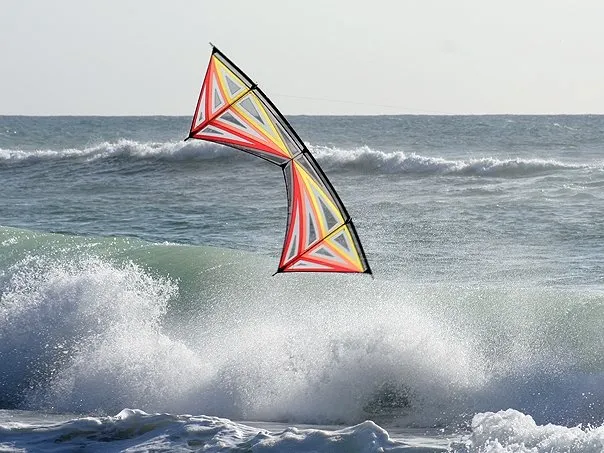 Build a quad-line kite - Polo KitesA very detailed step-by-step guide to "revopolos", with lots of explanatory photos.
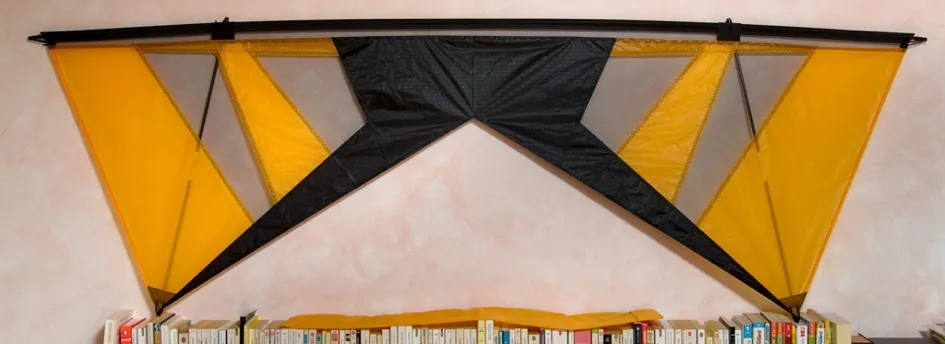 My first quad-line kite - GuardianA clear and concise feedback article: what works, what surprises you, and how to move forward.
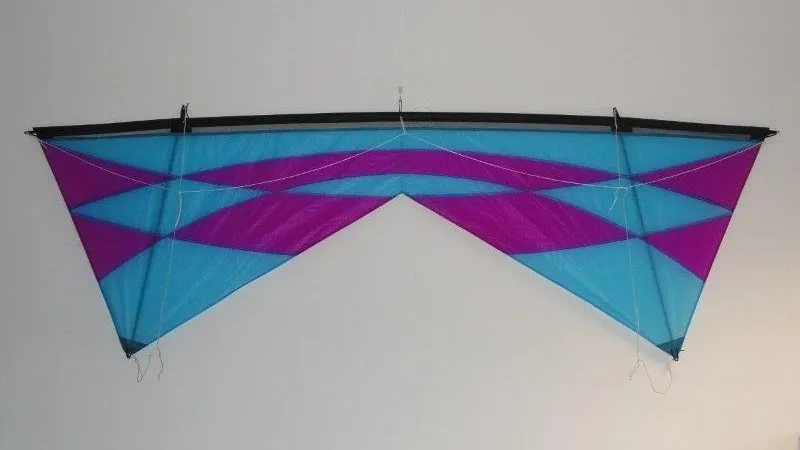 Revo making-of - ChristiaanFrom template prep to finished sail. (No bridle and no full-size plan.)
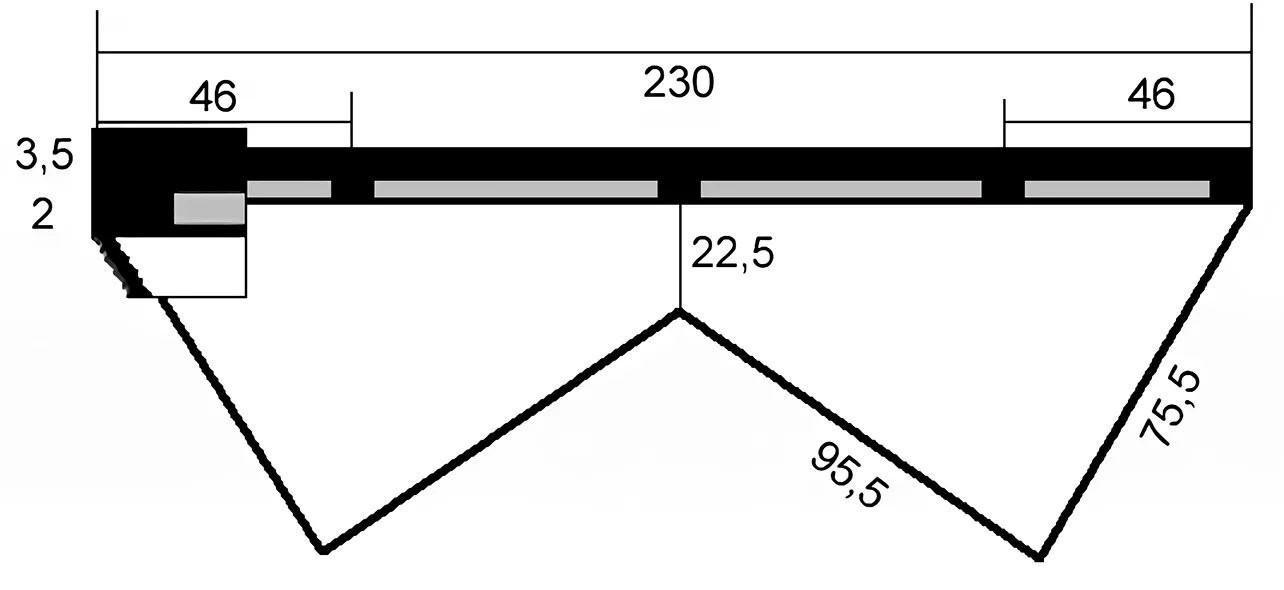 Revomania - plans + step-by-stepReady-to-use plans plus a full build guide: sail, leading edge, grommets, bridle and finishing details.
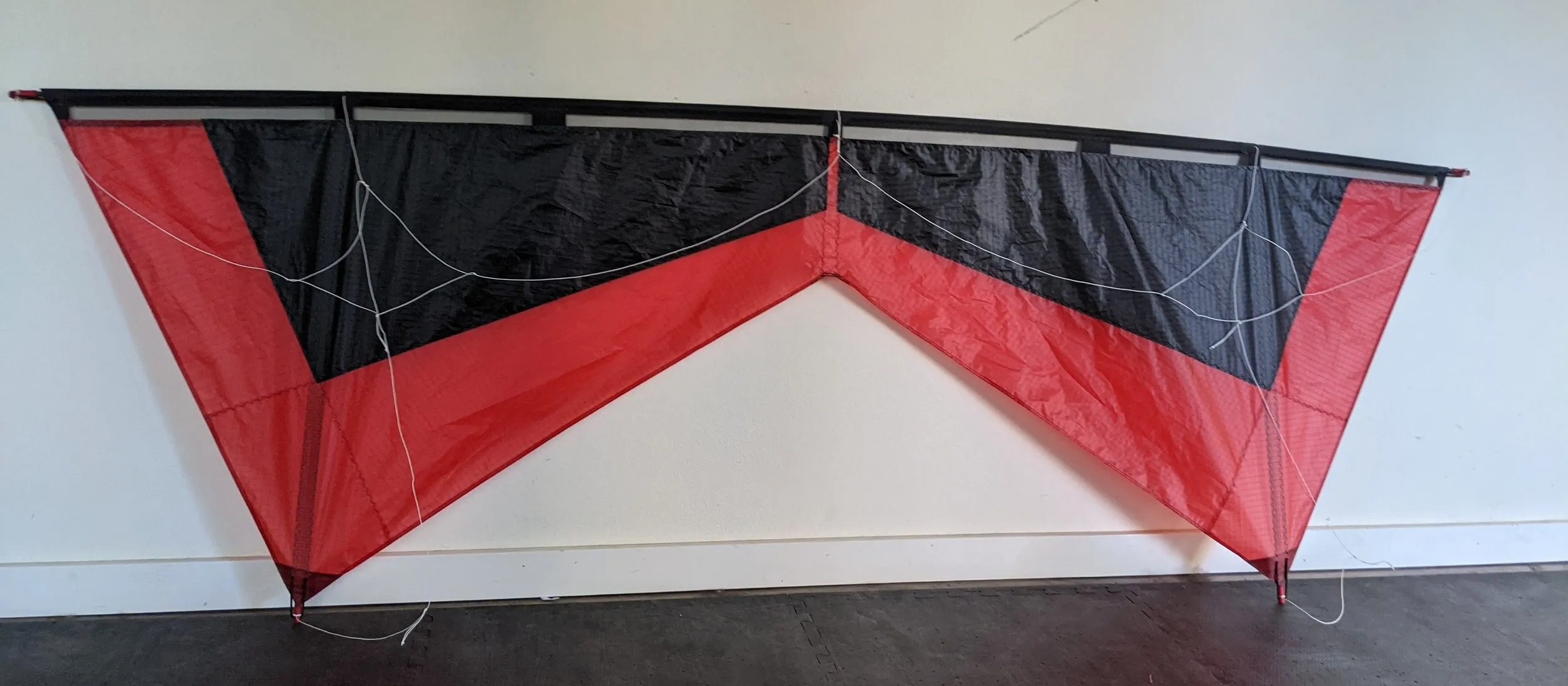 Essentials - Spence WatsonA solid Revolution 1.5 baseline design, available with several venting levels.
 Mini Pulse - Josh MitchesonPlans plus extensive video tutorials, with standard / semi-vented / vented variants.Rev 1.5 by Yves Ganne (Revolution 1.5 type)How Yves builds his Rev 1.5: full-size plans, more than 100 photos, and written explanations.Rev 1.5 by Punk Sportif (Revolution 1.5 type)Build a homemade Revolution 1.5, including plan, explanations and photos.
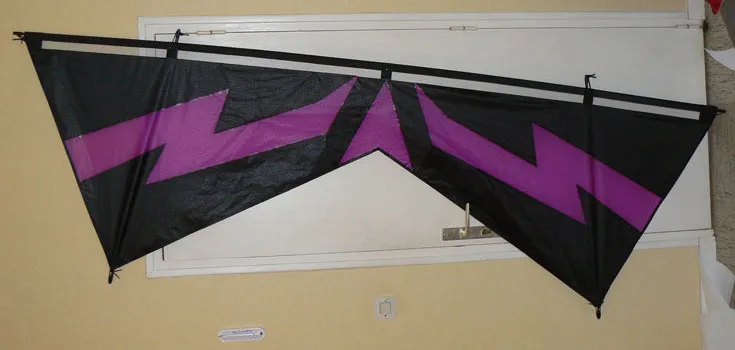
 2-line freestyle - Tom's Kite Building SiteThe A-to-Z guide for a dual-line freestyle kite. Many principles also apply to quad-line building.Urban Ninja - Thomas HorvathAn ideal single-line kite for light wind. Very handy when wind drops to zero, with guide + tutorial videos.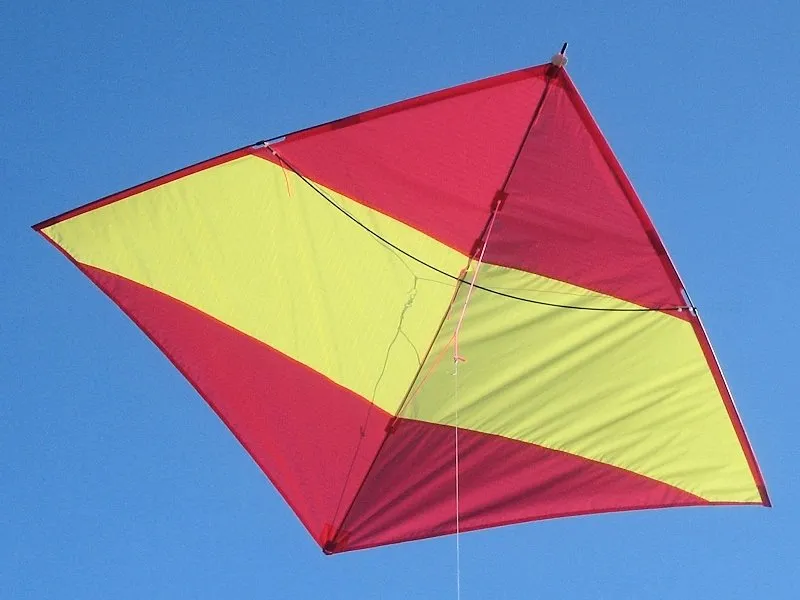
Other kite plans
Section titled "Other kite plans"Amateur kitefliers also share plans inspired by well-known kites, including Revolution models:
Various construction techniques
Section titled "Various construction techniques"Accelerated construction videos
Section titled "Accelerated construction videos"You can also watch some construction videos.
Spence Watson video
Brett Marchel video
Spence Watson video
Video from Tétra
Not a quad-line kite, but useful construction techniques.
Modifying your kite
Section titled "Modifying your kite"Transforming a classic bridle into a turbo bridle
Section titled "Transforming a classic bridle into a turbo bridle"Gilles’ video
Ventilating a kite
Section titled "Ventilating a kite"New tutorial — Step-by-step 16-photo guide to venting a quad line kite with Christiaan van Oosterhoudt: prep the templates, lay in the mesh, glue, then sew… All shared with the author’s permission, captioned and translated FR/EN.
Tutorial: vent your kite (16 photos)Other feedbacks - “Au fil du vent” forum
Installing a T-connector
Section titled "Installing a T-connector"Installing T-connectors by Riffclown
Sewing techniques
Section titled "Sewing techniques"Never used a sewing machine? A first kite is a practical way to learn, as long as you test on scraps before sewing the actual sail.
Choosing the sewing machine
Section titled "Choosing the sewing machine"You don’t need a professional sewing machine to build Revolutions or other quad line kites.
Here are the essential features we’ve learned from our experience. The vast majority of sewing machines include these features:
- 2 stitches: straight stitches and 3-stitch zig-zag. Straight stitches may even suffice.
- Tension adjustment, manual or automatic, to adapt sewing to different thicknesses
- Simple claw feed, or better, for regular seams
- A rheostat pedal for speed control
Check that the machine sews evenly. Missed stitches in the middle of a two-meter seam are painful to fix.
Techniques to learn
Section titled "Techniques to learn"- Set up and store the sewing machine
- Thread and install bobbin
- Set tension
- Manage sewing speed
- Use bartacks
- Undo a seam after a mis-stitch
- Tying simple knots
Tips for getting started
Section titled "Tips for getting started"Practice on spinnaker offcuts before sewing the sail. It is the fastest way to gain confidence and tune the machine.
Before starting a long seam,
- Always check the amount of thread in the spool and bobbin.
- Test the thread tension on scraps of the same thickness as the sail to be sewn (e.g. 2 layers of dacron and spinnaker for the leading edge).
- Allow for a few centimeters of slack thread, and hold these at the start of the seam to prevent them from escaping.
- Check that you can sew the planned length without being hindered by the shape of the sail and the sewing machine.
- Anticipate your sewing path and steps.
- Make sure you won’t be disturbed while you’re sewing.
- Make yourself comfortable.
When sewing,
- Start with a bartack if you need to.
- Maintain a steady, comfortable speed.
- Check that the seam doesn’t miss a little at a time. Stop if there are (see below).
- Before reaching the end, leave space for a stop stitch if necessary.
In case of failure,
- Trim with a seam ripper up to the missed stitches.
- Don’t cut excess threads - they’ll come in handy.
- Resume sewing at the last correct stitch.
- Once the seam is finished, you can knot the ends of the first and second seams.
Tutorials and sewing guides
Section titled "Tutorials and sewing guides"- Sewing basics - Blog Je fais moi-même (French blog)
Videos of various techniques
Section titled "Videos of various techniques"Here are some illustrated techniques for key steps. There are other techniques for each of these steps
Preparing patterns
Section titled "Preparing patterns"Video by Enrico Brödner
Cutting gauze panels
Section titled "Cutting gauze panels"Video by Enrico Brödner
Gluing and sewing panels
Section titled "Gluing and sewing panels"Video by Enrico Brödner
Video from Riffclown
Reinforcing the V of a Revolution
Section titled "Reinforcing the V of a Revolution"Video by Enrico Brödner
Gauze a leading edge
Section titled "Gauze a leading edge"Video from Enrico Brödner
Making a trailing edge (without bias)
Section titled "Making a trailing edge (without bias)"Video by Enrico Brödner
Making a trailing edge with bias
Section titled "Making a trailing edge with bias"Video by Enrico Brödner
Making an English seam
Section titled "Making an English seam"Video from Enrico Brödner
Making a leading edge
Section titled "Making a leading edge"Note: in general, kitefliers add the gauze to the sail, then the dacron sheath to make the leading edge. Here, Riffclown shows us the opposite approach: he prepares the entire leading edge, then adds it to the sail.
Riffclown’s video
Making a bridle
Section titled "Making a bridle"Riffclown video
Various resources
Section titled "Various resources"- Feedback on kite making - Au fil du vent forum (French forum)
- Construction pack by Cerf-volant services
- Quad line kites group - Facebook
- Here you’ll find dozens of home-building examples
- Building examples and techniques - Watty.us
- Sewing tips - Cerf-volant service
- Building a dual line kite - Vimeo
- Building materials - Ventsnick
- Tools - Ventsnick
- Assembly techniques - Ventsnick
- Designing a Revolution sail with a pattern - Cengel kite (in German)
Last updated