⚠️ Note: this content applies to French FFVL competitions only. It is written in English for convenience and educational purposes, as the format and figures are particularly valuable for learning and progression. It does not describe an international competition standard.
This page gathers the official figures selected for the French “Novice” dual-line individual category.
The shapes are simple enough to start working on precision and control without entering the full international figure set.
If you come directly to this page, we suggest you take a look at our presentation of compulsory figures to better understand their role in competition - and how they can help you progress in flight.
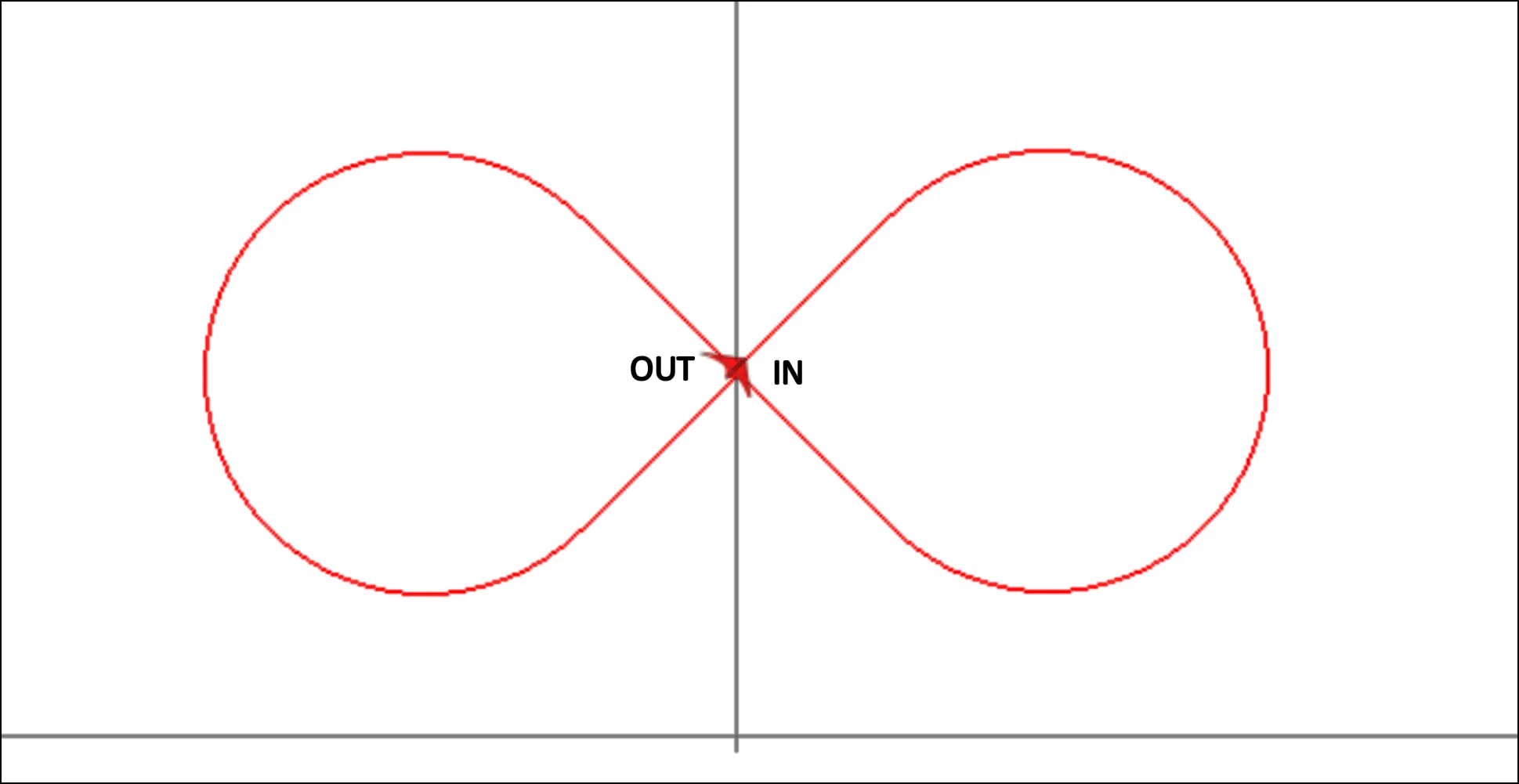
The kite performs an infinity (recumbent 8) over a large part of the window.
Input / Output
The IN and OUT are given at the same point, corresponding to the figure’s center of gravity.
Tips / Key elements
The 2 loops on either side of the center point must be identical in size.
The kite must pass through the center (figure input point) in the middle of the figure (between the right and left loops).
DIN02 - Circle
DIN02 - Circle
Description
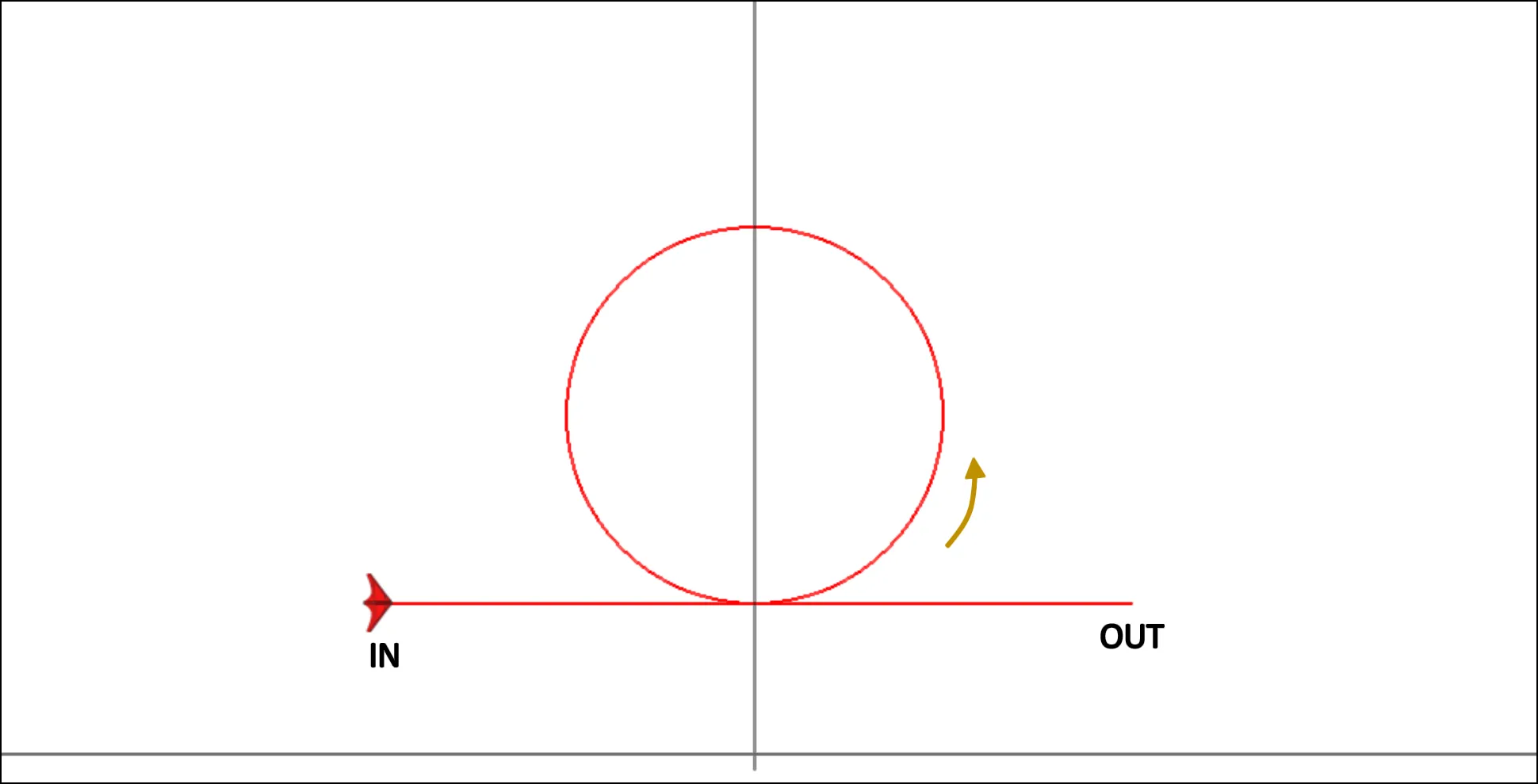
The kite moves on a horizontal axis parallel to the ground. When it reaches the window center, it makes a large circle to return to the circle’s input point. It then returns to its horizontal line parallel to the ground (in the same alignment as before the circle).
Input / Output
IN and OUT are given on either side of the window, at equal distance from the window center (on which the circle is based).
Tips / Key elements
The distance between the IN and the beginning of the circle, on the one hand, and between the end of the circle and the OUT, on the other, must be sufficient to allow the judges to appreciate the quality of the straight line and its parallelism to the ground.
DIN03 - Square
DIN03 - Square
Description
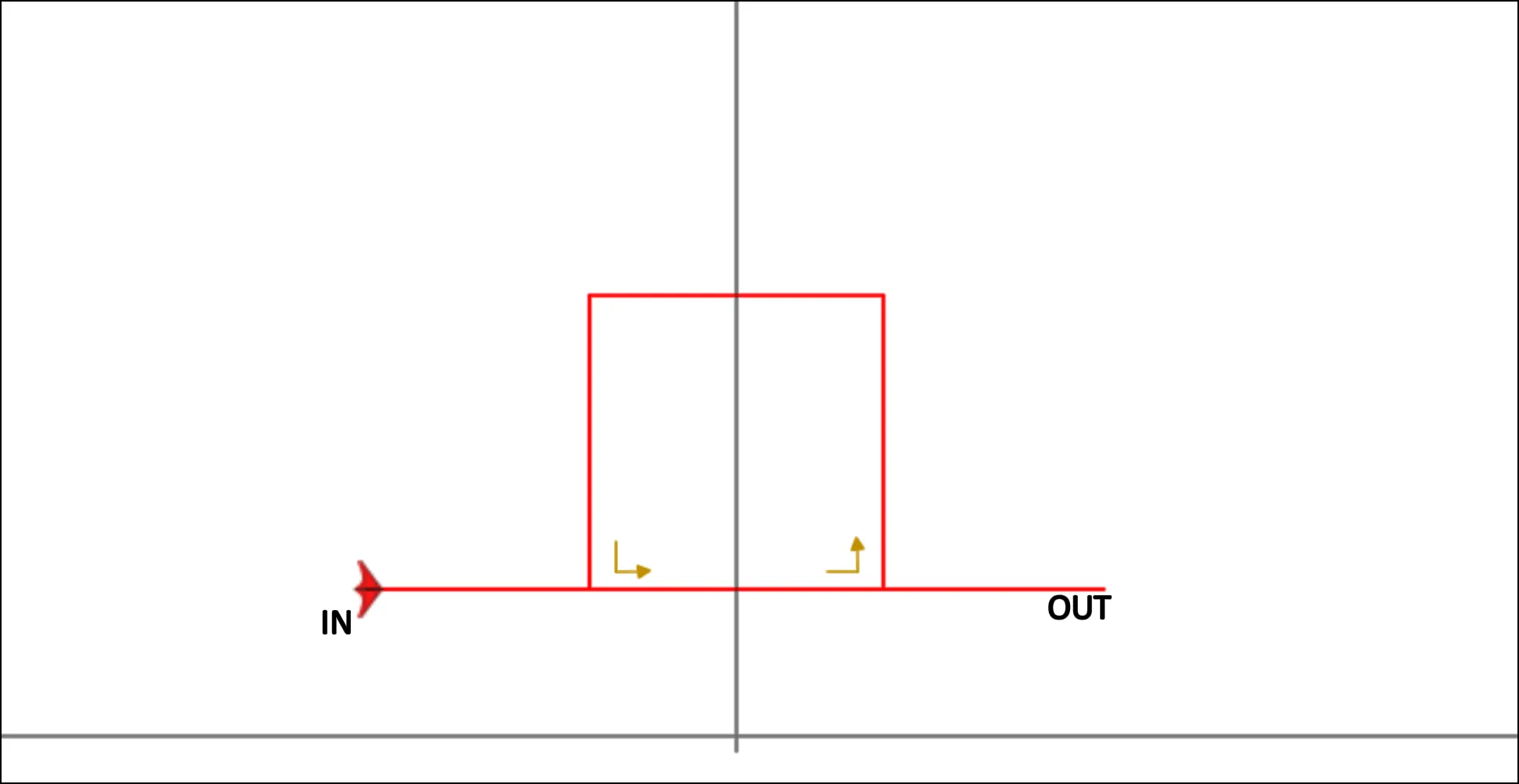
The kite is flown on a horizontal axis parallel to the ground. Once it has passed the window center, it makes a large square (upright) before returning to the horizontal axis parallel to the ground.
Input / Output
IN and OUT are given on either side of the window, equidistant from the window center (around which the square is executed).
Tips / Key elements
Lines must be straight and correctly aligned with the ground (parallel or perpendicular).
The sides of the square must be equidistant.
DIN04 - Test tube
DIN04 - Test tube
Description
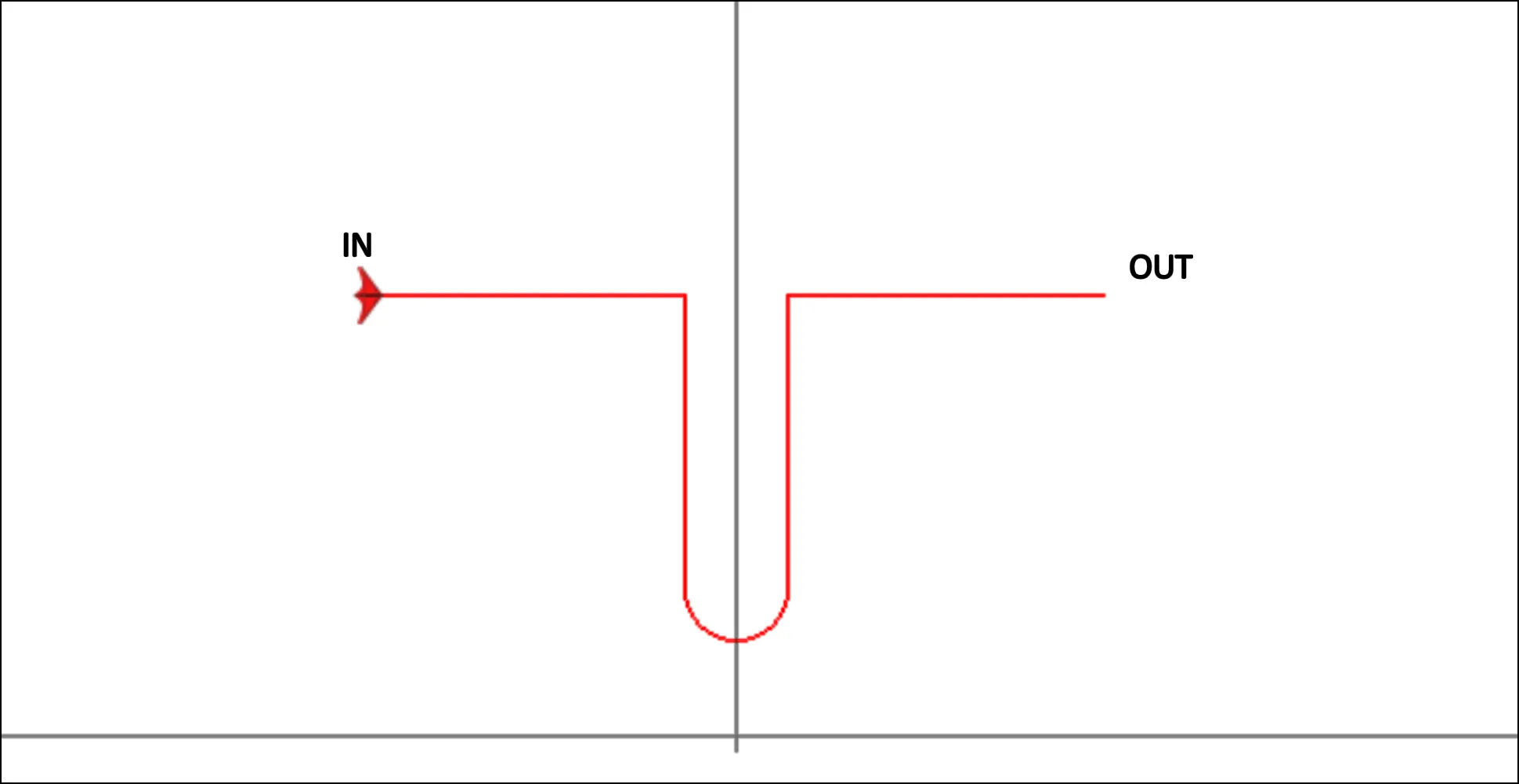
The kite moves on a horizontal axis parallel to the ground. Shortly before reaching the window center, it makes a right-angle dive towards the ground. Before reaching the ground, it performs a U-turn, then rises to the same level as before the dive. After another right angle, it returns to flight parallel to the ground.
Input / Output
IN and OUT are given on either side of the window, equidistant from the window center (around which the test piece is positioned).
Tips / Key elements
Lines must be straight and correctly aligned with the ground (parallel or perpendicular).
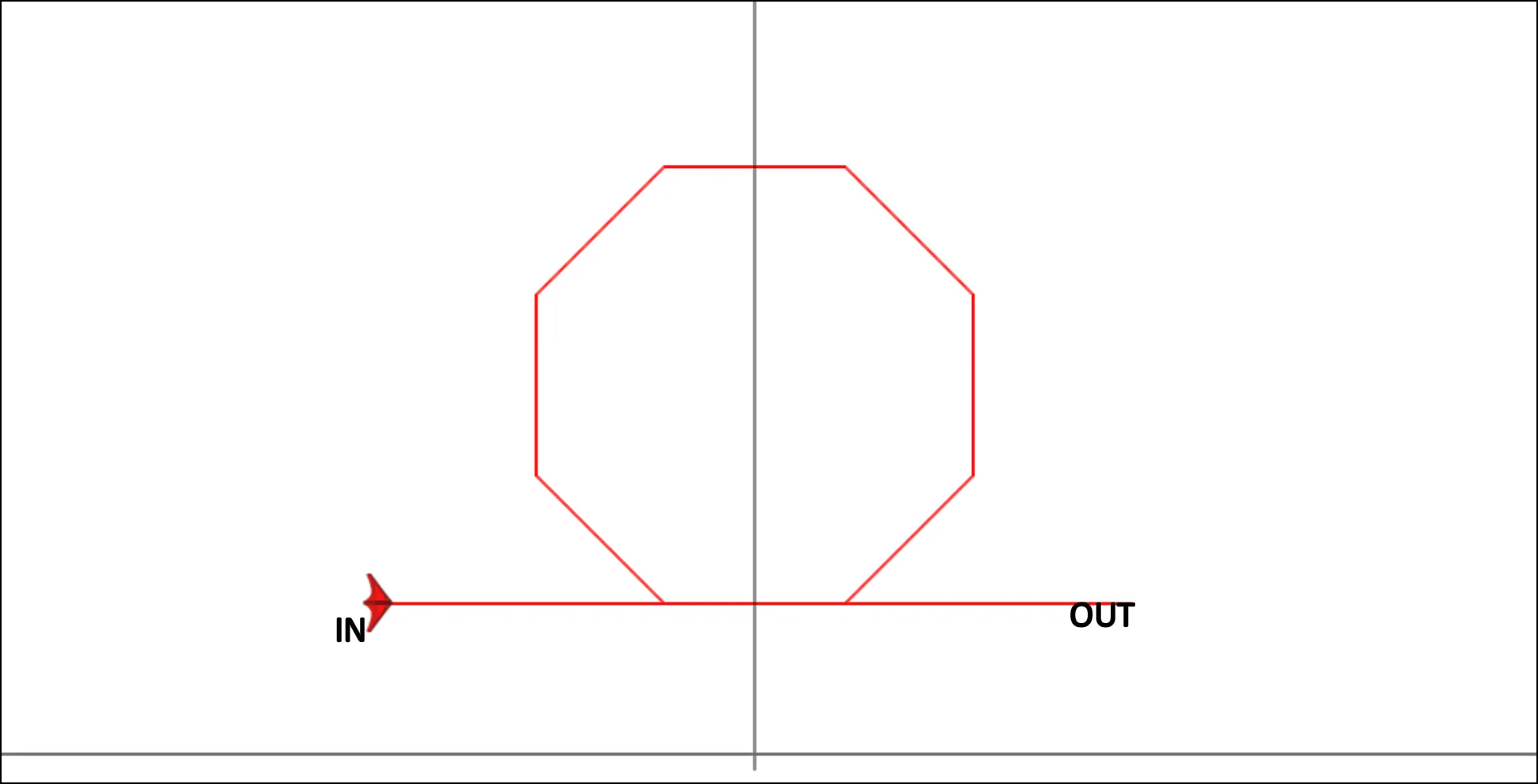
DIN05 - Octagon
DIN05 - Octagon
Description
The kite moves on a horizontal axis parallel to the ground. Once it has passed the window center, it performs a large octagon before returning to the horizontal axis parallel to the ground.
Input / Output
IN and OUT are given on either side of the window, at equal distance from the window center (around which the execution of the square is based).
Tips / Key elements
Lines must be straight and correctly aligned with the ground (parallel, perpendicular or at 45°).
The sides of the octagon must be equally spaced.
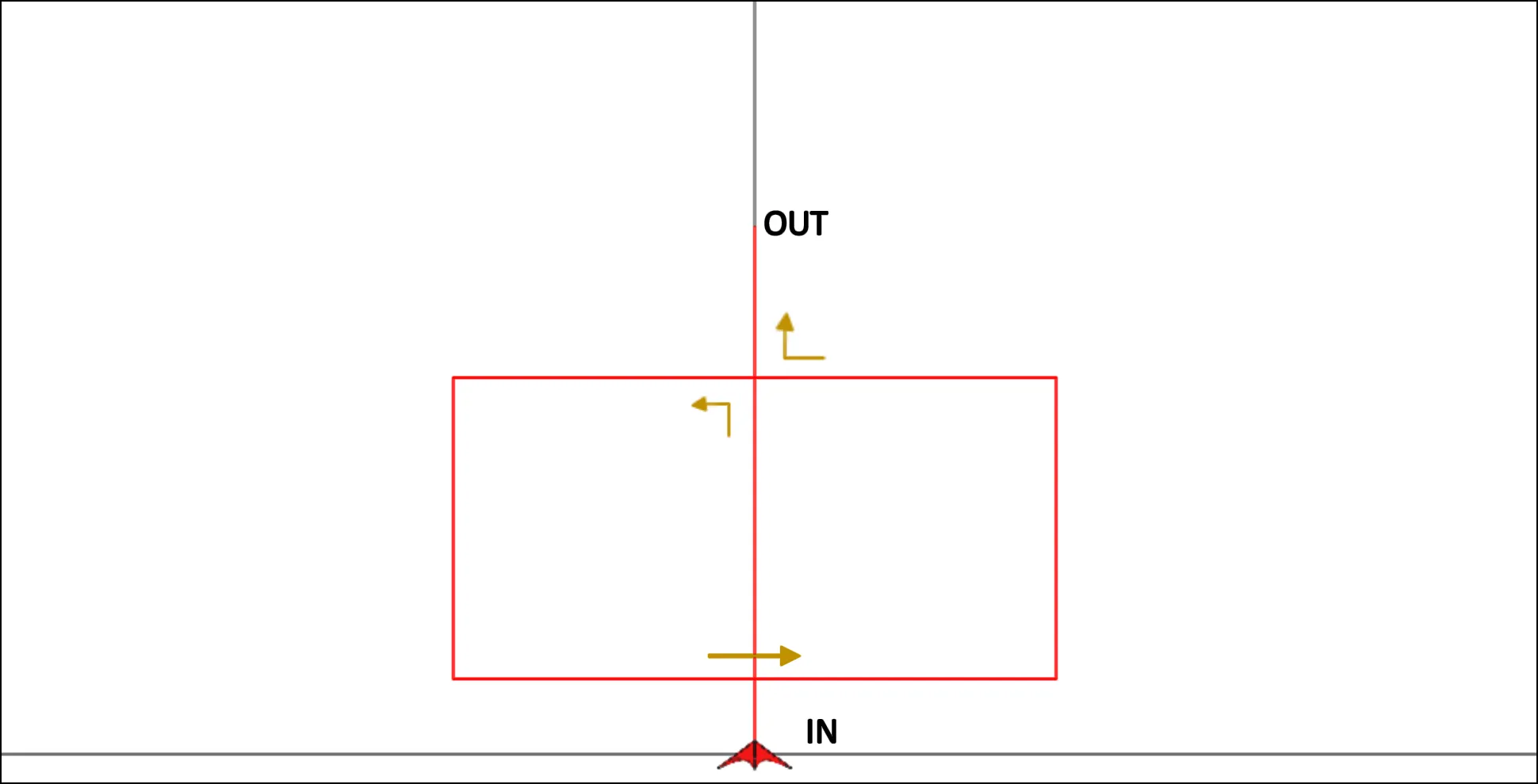
DIN06 - Rectangle
DIN06 - Rectangle
Description
The kite starts from the ground (take-off) and climbs perpendicular to the ground. When it reaches a certain height, it turns at right-angles to form a rectangle, then returns to the starting point and continues upright.
Input / Output
The IN is given just before take-off, and the OUT once the kite has resumed its climb along the central axis of the window.
Tips / Key elements
Lines must be straight and correctly aligned with the ground (parallel or perpendicular).
Opposite sides of the rectangle must be equally spaced.
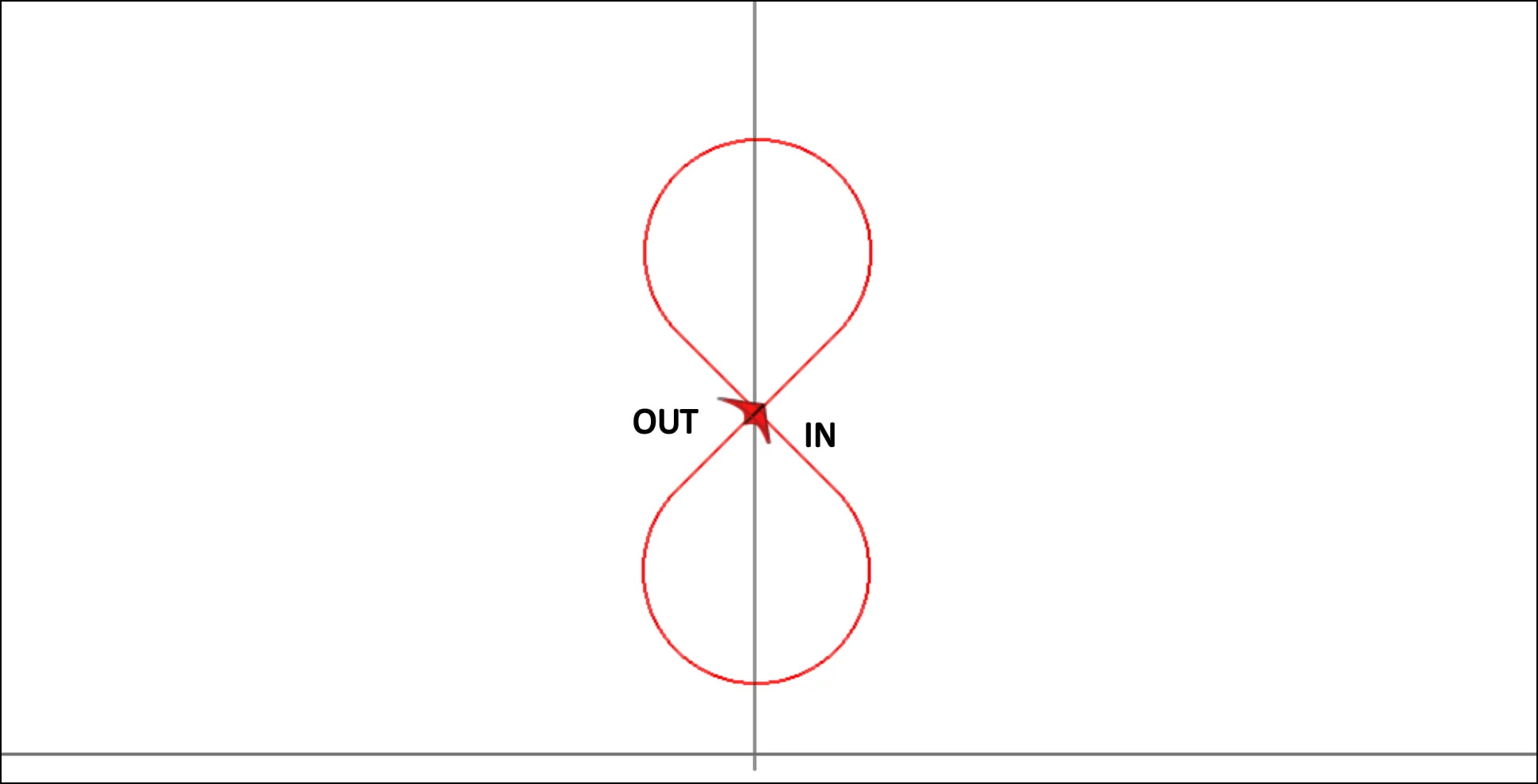
DIN07 - Vertical eight
DIN07 - Vertical eight
Description
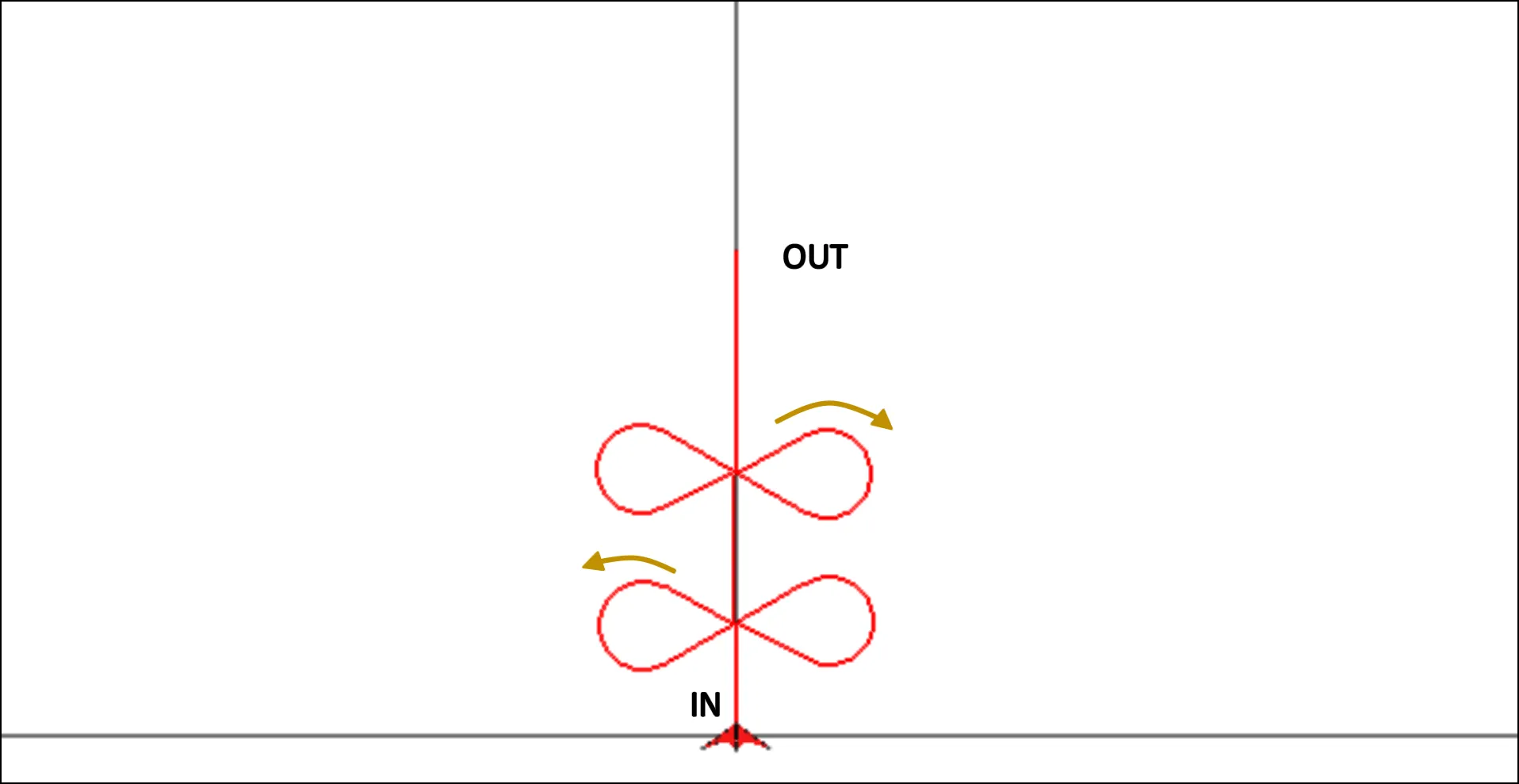
The kite performs an 8.
Input / Output
The IN and OUT are given at the same point, corresponding to the figure’s center of gravity.
Tips / Key elements
The 2 loops on either side of the center point must be identical in size.
The kite must pass through the center (figure input point) in the middle of the figure (between the top and bottom loops).
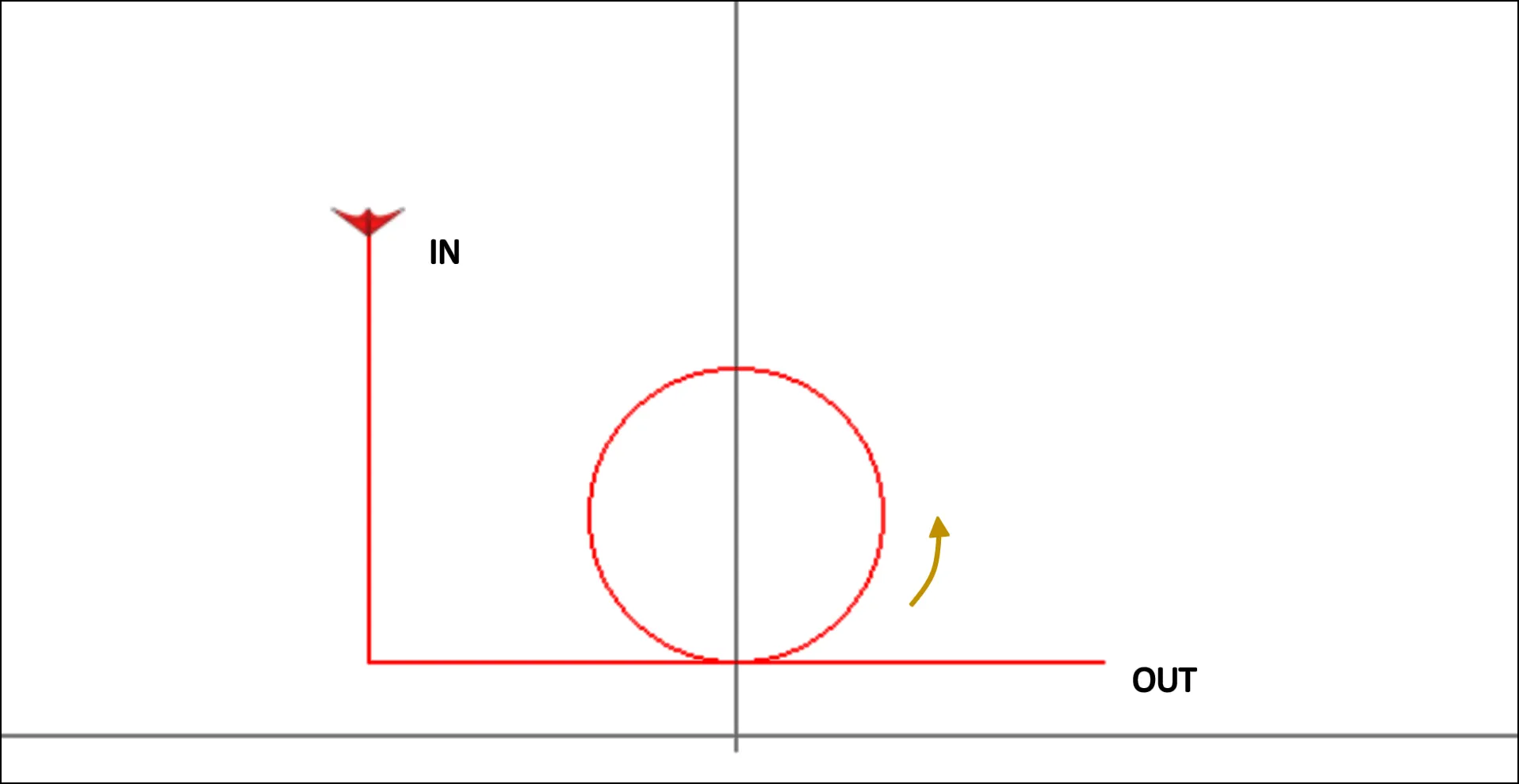
DIN08 - Circle on L
DIN08 - Circle on L
Description
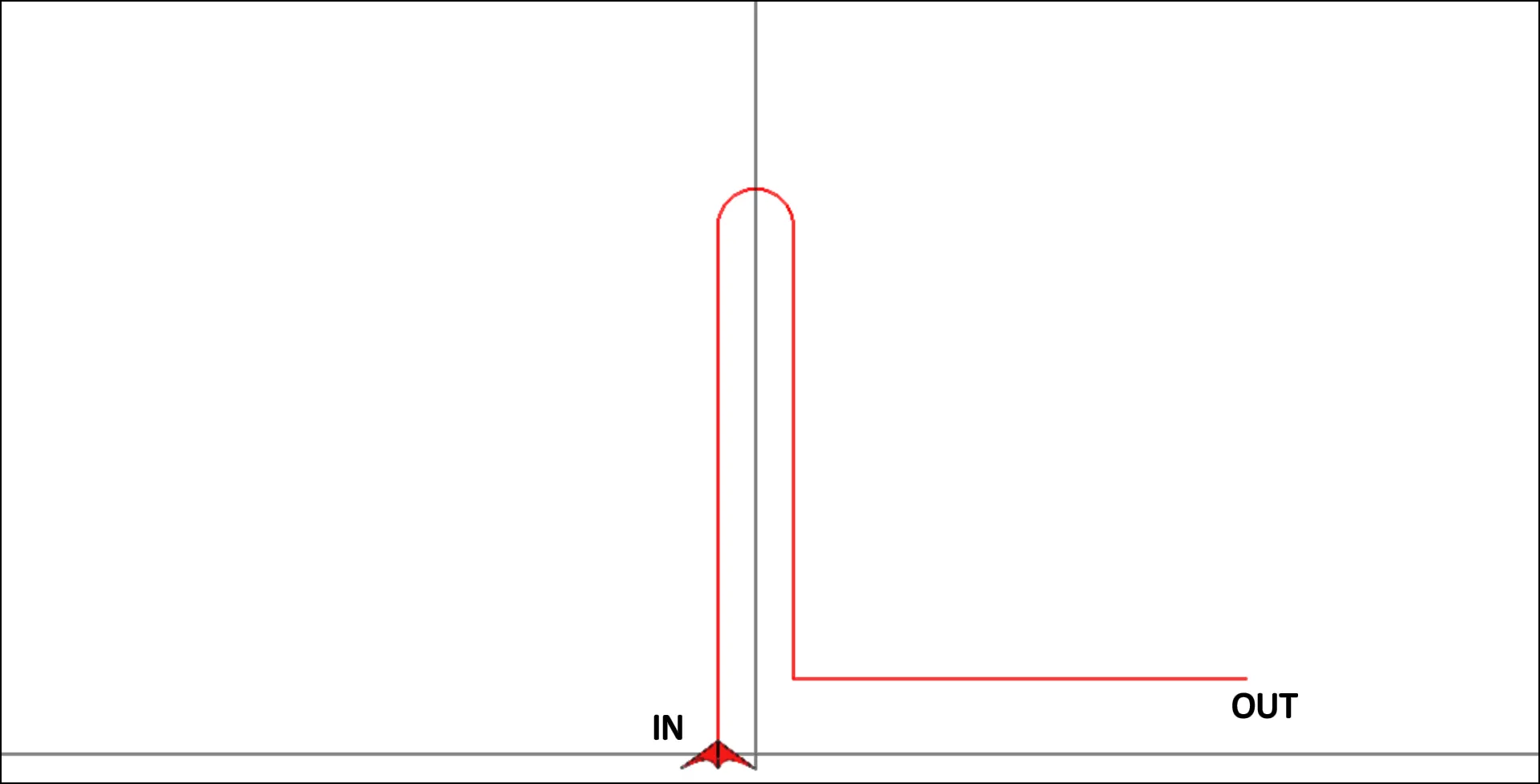
The kite starts the figure downhill, perpendicular to the ground. After a right-angle turn, it travels the distance to the window center on a horizontal axis parallel to the ground, then completes a fairly large circle before resuming its course, parallel to the ground, to the figure’s exit point.
Input / Output
The IN is given high up when the kite is in a descent position perpendicular to the ground.
The OUT is given after the kite has travelled a sufficient distance out of the circle for the judges to see that the line is straight, parallel to the ground and in line with the line above the circle.
DIN09 - Double infinity
DIN09 - Double infinity
Description
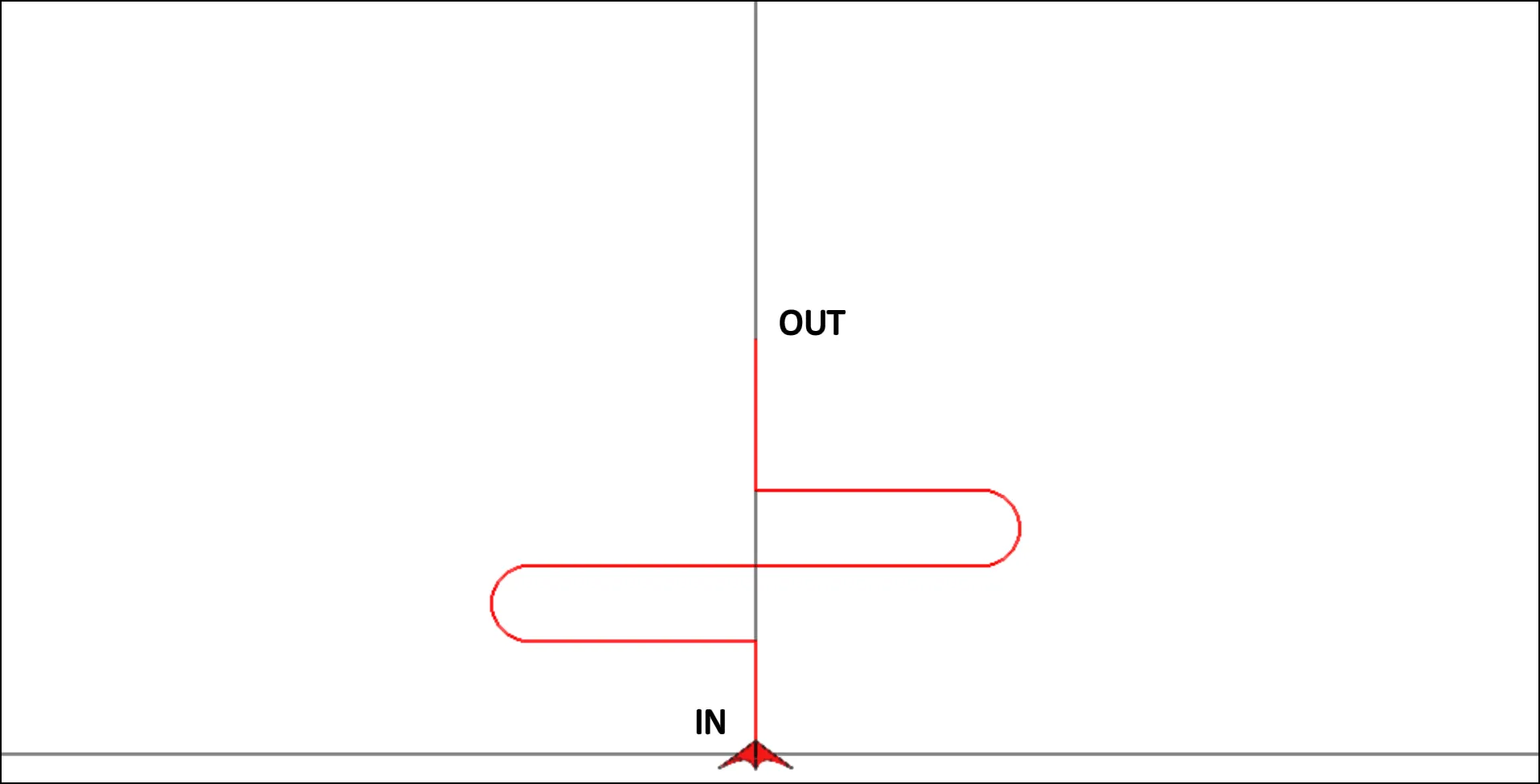
The kite starts from the ground (take-off) and climbs perpendicular to the ground. Very quickly, it enters a first small infinity (8 down), then resumes its climb at the same point it left off. After a short uphill distance, he performs a second small infinity (mirroring the first), of the same proportion as the first, then finally resumes his run upright.
Input / Output
The IN is given just before take-off, and the OUT once the kite has resumed its climb on the window’s central axis.
Tips / Key elements
Lines (when climbing) must be straight and perpendicular to the ground.
The two infinites must be the same size. One must be started from the left and the other from the right.
DIN10 - Launch & Jump
DIN10 - Launch & Jump
Description
The kite launches from the ground (take-off) and performs a long climb perpendicular to the ground. After a tight half-turn (on the wing tip), it begins a descent parallel to the previous climb. Shortly before reaching the ground, he makes a right angle, leaving him on a horizontal line parallel to the ground.
Input / Exit
The IN is given just before take-off. The OUT is given after the kite has travelled a sufficient distance from the Jump for the judges to see that the line is straight and parallel to the ground.
Tips / Key elements
Lines must be straight and aligned with the ground (horizontally or vertically).
The closer the final right-angle turn is to the ground, the more successful the trick.
DIN11 - Climbing ladder
DIN11 - Climbing ladder
Description
The kite starts from the ground (take-off) and climbs perpendicular to the ground. After a short time, the kite turns at right angles to the ground. After covering a good distance, it performs a relatively tight upright turn (almost wing tip), then crosses the entire window to perform a second tight upright turn in mirror image. Crossing the window center axis, it makes another right-angle turn to resume its climb.
Input / Output
The IN is given just before take-off, and the OUT once the kite has resumed its climb on the window centerline.
Tips / Key elements
Lines must be straight and aligned with the ground (horizontally or vertically).
The two half-turns must be equidistant from the window center axis.
DIN12 - Triangle
DIN12 - Triangle
Description
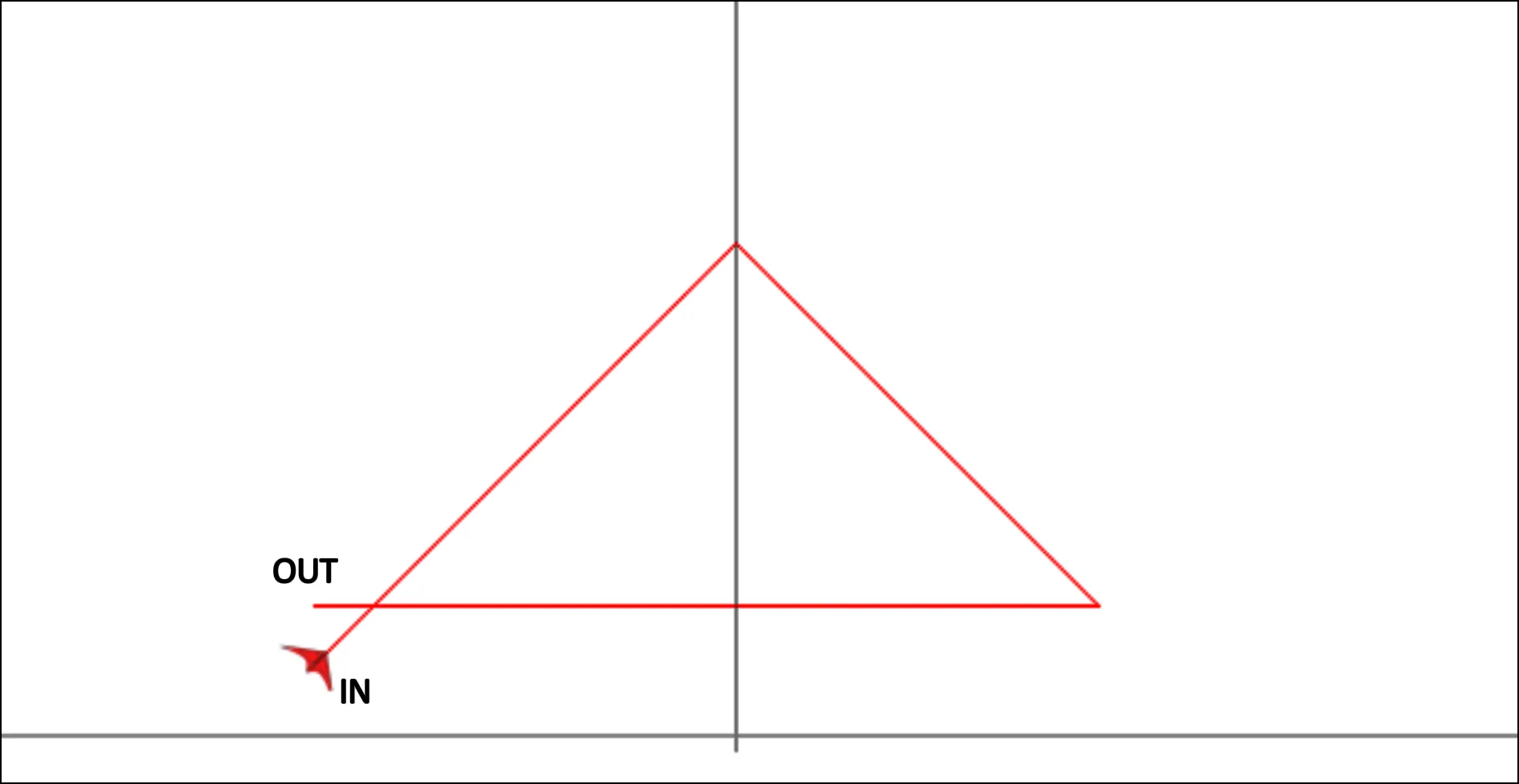
The kite climbs diagonally (at 45°). When it crosses the window center axis, it makes a right angle in order to descend with the same slope as during its ascent. He then makes a 45° angle to return to his starting point on a straight line parallel to the ground.
Input / Output
The IN is given when the kite has started its climb and is set on a 45° diagonal.
The OUT is given when, on the horizontal line parallel to the ground, it reaches the starting point of the figure (where the IN was given).
Tips / Key elements
Lines must be straight and aligned with the ground (horizontally or obliquely at 45°).
Angles must be well marked (no rounded turns).
DIN13 - Graph
DIN13 - Graph
Description
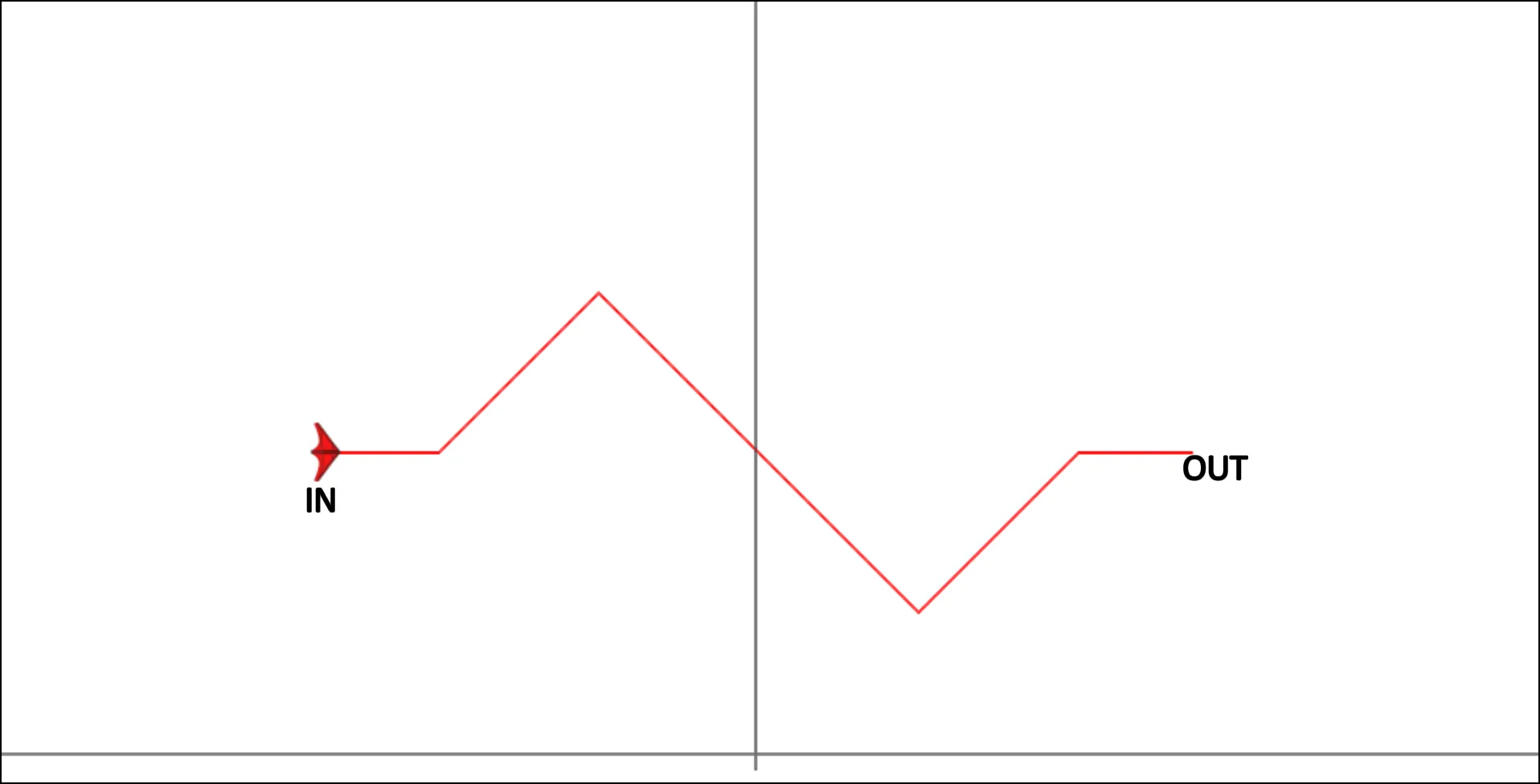
Starting from a horizontal line parallel to the ground, the kite quickly makes a 45° angle upwards, then a 90° angle downwards. After descending 2 times the distance of the first climb, the kite makes another right angle upright, and again travels the same distance as the first climb, to return to the alignment of its original trajectory. After a final 45° angle, it resumes its course parallel to the ground on the same line as at the start of the figure.
Input / Output
The IN is given on the horizontal straight line before the first climb.
The OUT is given on the horizontal straight line after the second ascent.
Tips / Key elements
Lines must be straight and aligned with the ground (horizontally or at an angle of 45°).
The distance of the 2 ascents must be identical and the distance of the descent must be twice as long, so that the horizontal lines at the beginning and end of the figure are aligned.
DIN14 - Low square
DIN14 - Low square
Description
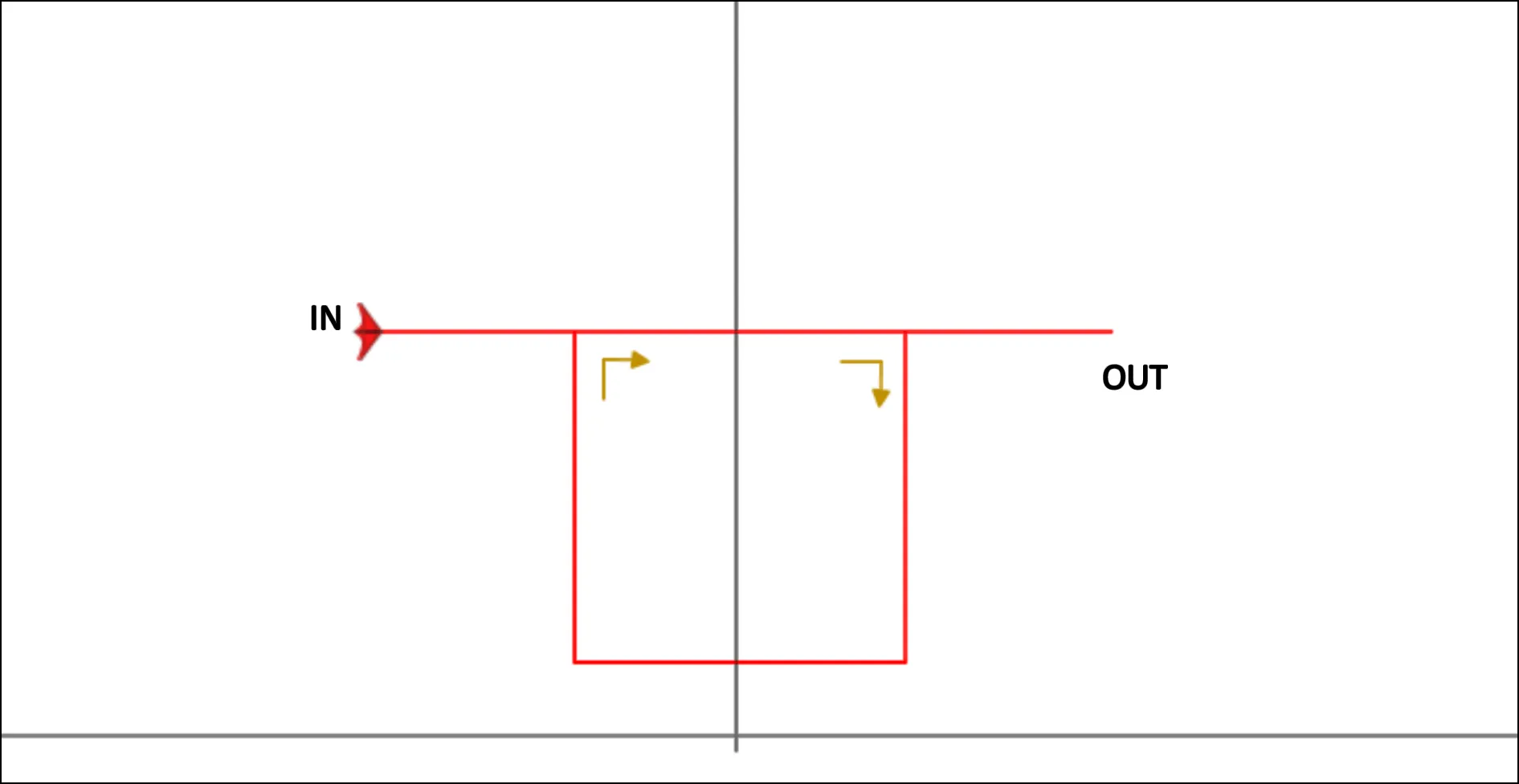
The kite moves on a horizontal axis parallel to the ground. Once it has passed the window center, it performs a large downward square before returning to the horizontal axis parallel to the ground.
Input / Output
IN and OUT are given on either side of the window, equidistant from the window center (around which the square is executed).
Tips / Key elements
Lines must be straight and correctly aligned with the ground (parallel or perpendicular).
The sides of the square must be equidistant.
DIN15 - C
DIN15 - C
Description
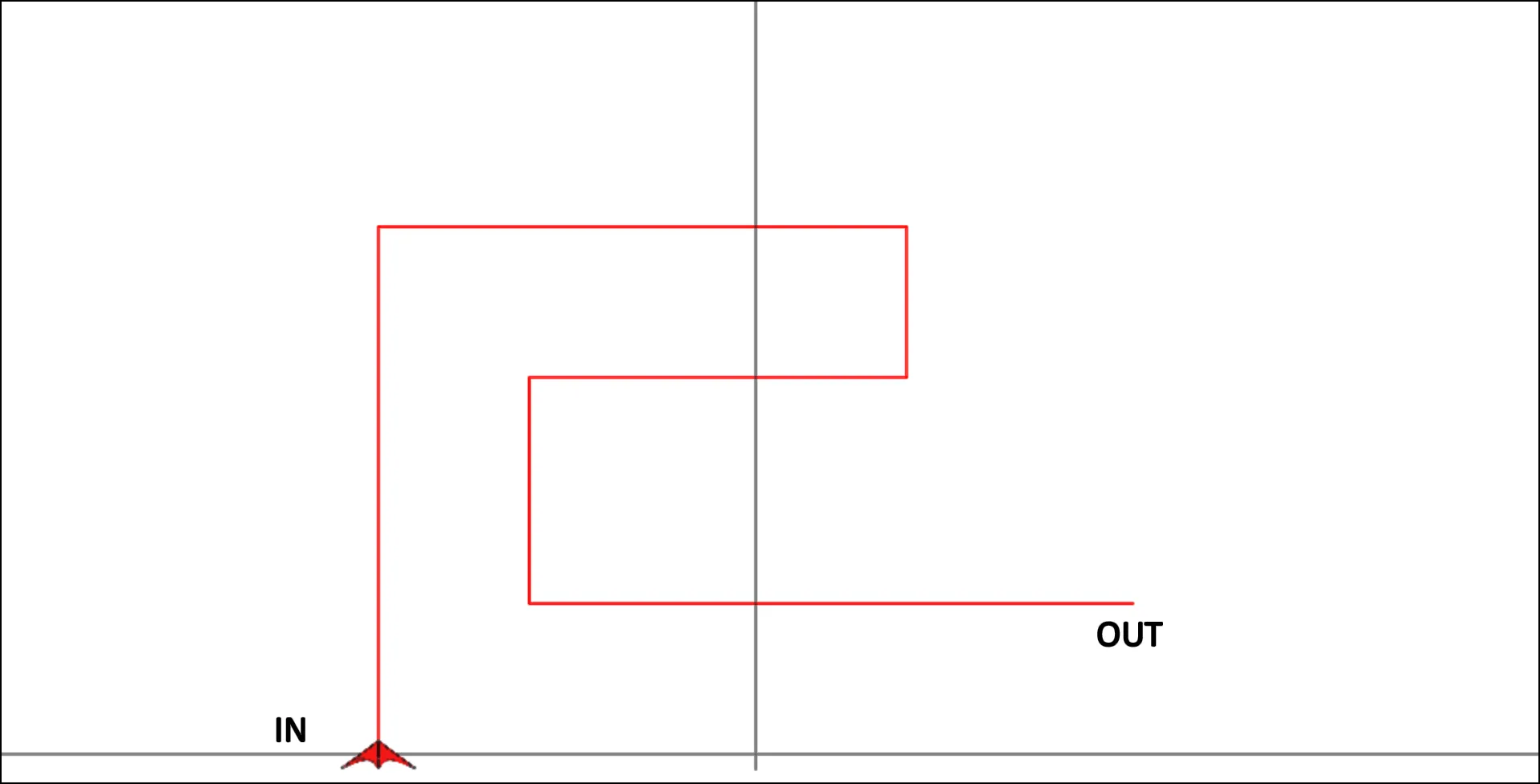
The kite starts from the ground (take-off) and performs a long climb perpendicular to the ground. It then makes a series of right-angle turns to form a sort of C in the sky.
Input / Output
IN is given just before take-off, and OUT once the kite is equidistant from the window center in relation to its starting position.
Tips / Key elements
Lines must be straight and aligned with the ground (horizontally or vertically).
Right angles must be well marked (no rounded corners).